A young signalman on the Southern Railway, at Cane Hill Box, Coulsdon, had the fright of his life yesterday at daybreak. Looking out of one of the windows of his cabin, Ernest Fills saw a ghostly apparition approaching, says the London “Daily Chronicle” correspondent. It proved to be an old lady in her night attire, with her hair in disarray all over her face. There was a fixed stare in her eyes; she was clasping her hands over her breast and screaming. Evidently she had been attracted to the signal-box by the light. Fills opened the door and asked her in, but she did not answer. He touched her on the shoulder, and she turned round and cried, “Don’t touch me! Don’t send me back; don’t send me back! I want to find my children.” The signalman was alarmed, for the woman was shivering violently, but he persuaded the wanderer to enter the signal-box, and went to fetch an asylum attendant who lived near. When he returned the woman had gone. A quarter of an hour later she was found on the side of the railway, at Ashdown Park Hotel, still shrieking, “Don’t send back; don’t send me back.” It was found that the woman was a dangerous mental patient, who had escaped from Cane Hill Asylum. She was returned there.
Hartlepool Northern Daily Mail,Thursday, 26 April 1923.
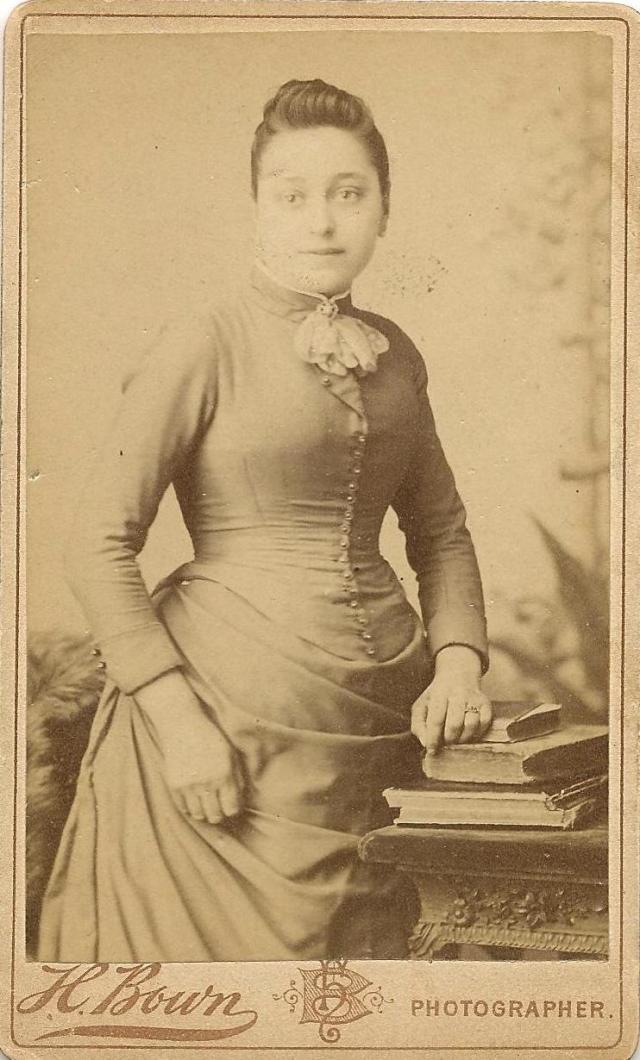
Our great grandmother, Mary Anne Deverill, was a patient at Cane Hill Asylum not long before this article was written. This photograph shows her in happier times, in the 1890s, about to be married.
When you sit down to write a book like The Cowkeeper’s Wish that spans generations and decades, it’s inevitable that some details and characters will have to go by the wayside. As difficult as that culling is for those of us who love a big story, and as tantalizing the detail or interesting the character being omitted, in the end the edit usually makes the narrative tighter and tidier and more enjoyable for the reader. One of the characters left out of our story was our great grandfather’s sister, Kate Sarah Deverill. It’s never nice to exclude a sister, so this post is meant to remedy that.
The third child of William Henry Deverill and Mary Margaret Taylor, Kate was born in Uxbridge on February 3rd, 1872. Her sister Ada was three years older, and her brother Harry, our great grandfather, two. All three children had been baptized in the so-called non-conformist (meaning not Church of England) Providence Chapel, the same church where their parents had wed in 1867. How William Henry and Mary Margaret came to meet is an interesting tale, full of speculation, but for now suffice to say that William was in the grocer’s trade, and Mary, daughter of the resourceful Mary Anna Bell-Taylor, had inherited her mother’s entrepreneurial spirit and ran a toy shop.
William grew up in Uxbridge, a small community 25 kilometres from the centre of London, located on the main road between that city and Oxford. Throughout the 18th century, travel along the route was steady with some 40 stage coaches a day stopping to change horses and rest passengers, and dozens of inns, alehouses and breweries did a brisk trade. Because of the traffic, the area was rife with highwaymen, and several were said to have lived openly in Uxbridge, lending the village a reputation for dishonesty. Apart from the coaching trade, an agricultural industry existed in Uxbridge, centred on corn and flour, market gardens and greenhouses. In the 1830s, brick-earth, a kind of loam that only needs baking to form usable building bricks, was uncovered nearby, and became a major source of local employment. When the main railway line from London was laid through another community and Uxbridge received only a branch line, its industries quickly declined, and throughout much of the 19th century, when our William Deverill lived there, first as a lad, then as a young husband and father, Uxbridge remained a sleepy market town.
Kate lived there with her parents and siblings until she was six or seven years old, old enough to be aware of the most likely reason for the family’s move, her father’s bankruptcy. A notice in the London Gazette recorded William’s misfortune, directing that “at three o’clock in the afternoon precisely” on January 20, 1876, he appear at the offices of Messers. Woodbridge and Sons, Solicitors, for a meeting with his creditors. His days as a grocer weren’t over, but he’d no longer be a business owner, and by 1878 he’d moved his young family to Greenwich, settling near a snarl of railway lines and close to his wife’s relatives.
There are no known photographs of Kate, either as a child or an adult, so we don’t know if she shared her brother Harry’s dark eyes or sister Ada’s round smile.
A later photograph of Kate’s younger brother Jack and older sister Ada. Did she look like either of them?
Presumably she learned sewing skills from her dressmaker mother, since on the 1891 census she and her sister Ada, then 19 and 22, still lived at home sewing shirts for a living. At some point between 1891 and 1897 Kate moved out on her own, and from this point on, her story, like that of so many women, meshes with that of the men in her life, and Kate fades into the background. We do know that she took a flat on the north side of the Thames in the Covent Garden area near Buckingham Palace. Despite its proximity to the royal palace, the inhabitants, according to Charles Booth’s London poverty maps and notebooks, were “mixed. Some poor living … but not rough.” Part of a street improvement plan implemented in 1880, Kate’s address, 7D Block, Bedfordbury, was most likely the Peabody Buildings, tenement structures with “luxury” features like outdoor recreation space and laundry facilities, although the flats did not have running water. Presumably, these were happy days for Kate, given the presence at 10B Block of a young man with the unusual name of Frederick Gaughan Burnett. If we were to try to characterize Fred based on the few details we know about him, it would be tempting to imagine him as a carefree charmer with an easy laugh, happily fabricating the facts of his past. Certainly he is an enigma for us, more than a century on, trying to make sense of the few perplexing clues left behind. On one record, his father was called Frederick, an Indian Commissioner; on another, William, a knight; on a third, Sir William Gaugan Burnett, I.C.S. (either Indian or Imperial Civil Service). Yet Fred himself worked as a railway porter, and later a commercial salesman, neither job plausible for the only son of a man with a knighthood. These oddities didn’t matter to Kate, or perhaps she knew the true story we’ve been unable to find. Whatever the case, she married Fred in July, 1897, a few weeks after the celebrations for Queen Victoria’s diamond jubilee. The register shared a few more surprises: the wedding occurred at St. Martin-in-the-Fields on Trafalgar Square, a grand and historic Church of England place of worship, though Kate had been baptized as a Methodist, and Fred’s “Rank or Profession” was reported as Soldier, R.H.A., or Royal Horse Artillery.
It’s possible that all this is fact. Perhaps the initial recording of Fred’s father as another Frederick instead of William was a clerk’s error; perhaps Fred’s father had indeed been knighted for his service to the crown as a member of the civil service in India, and any record of him has simply not survived. Perhaps Fred was the illegitimate son of this knighted man, which would explain the difference in their stations – the father a person of some means and accomplishment, the son carting other people’s luggage for a living, and taking in boarders to help pay the rent. It’s even conceivable that Fred was indeed a soldier in the Royal Horse Artillery, and that as a very young man he’d worn the crisp blue uniform with its rows and rows of gold braid adorning the chest and cuffs, although any accounts to prove this remain elusive, as do any records at all of Fred before he married Kate.
Waterloo Station in 1902, where Fred may have worked as a railway porter.
So Fred is one of those frustrating and fascinating genealogical brick walls, although once his story joins Kate’s, it is not so obscure, but no less interesting. The couple settled at first in the Waldeck Buildings on Windmill Street in Lambeth, a “superior, improved dwelling” where the flats boasted their own sink with running water and “plenty of shelves and good cupboards.” The buildings were situated close by Waterloo Station, a likely place of employment for Fred given his work as a railway porter. Waterloo had become quite ramshackle, with platforms added willy nilly since its opening in 1848, and by the time Fred worked there it was considered the most perplexing station in the city, and was the butt of jokes and music hall gags.
First, second and third class coffin tickets, ensuring that no body, whether dead or alive, need rub with another of the wrong sort.
In addition to being a snaggle of disorganization, Waterloo also had a spur line to the dedicated station of the London Necropolis Company, which ran funeral trains daily to Brookwood Cemetery. These trains carried not only the coffins of the dead, but the mourning parties as well. Different classes were available on the trains for both the living and the dead, so an upper class corpse did not have to travel with a poor man’s corpse, or put up with his relatives.
The Waldeck Buildings where Kate and Fred lived was chock full of police constables, the lowest rank on the force, and who were paid a relatively low wage. Why so many police in one place? One explanation may be the floating police station constructed in 1900 at the Waterloo Pier, home to the Thames River Division of the Metropolitan Police Force. The River Police, as they were known, had a long history of patrolling the Thames, and in fact had existed well before London’s Metropolitan force was formed, and with which they’d amalgamated. Once, smugglers and cargo thieves had been the division’s main focus. Now, at the end of the 19th century, their floating station was as well known for its pots of geraniums outside as it was for missions of recovery. The Waterloo Bridge where the division floated was the most popular spot on the Thames for suicides, and during patrol while the men watched for cargo thieves they scanned the water for bodies too.
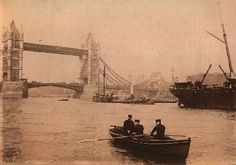
Thames River Police patrolled the river watching for cargo thieves and suicides.
Living amongst so many police officers meant Kate and Fred surely knew several personally, and it may be why, in 1911, having moved back north of the Thames to St. Pancras in the area of Gray’s Inn, they took in Arthur Steggals as a boarder. Arthur was a member of Central Investigations Division of the London Metropolitan Police, described as having brown hair, blue eyes and a fresh complexion. He’d joined the force in 1900, and had progressed through the ranks, becoming a detective with some experience, and a sergeant. Searches of newspapers and police court records return Arthur’s name repeatedly, and give us a flavour of the kind of work an Edwardian-era policeman did, and some insight into Arthur’s character. An article from 1908 recounts the arrest of a man who stole several pairs of boots, including Arthur’s, from the police station. Encountering the man on the street, Arthur recognized his own boots, and took the fellow into custody. At his court hearing it was reported that the man was a workhouse inmate but that he sometimes worked at the police station doing odd jobs. In the past Arthur had helped him out by giving him a jacket and waistcoat. The magistrate was lenient by Edwardian standards, and told the accused he would not send him to prison this time, but placed him under probation for a month. Another newspaper item tells a rougher story, of Arthur and a second officer in a “desperate fight” with two men caught burgling a warehouse. One of the perpetrators escaped, and the other was arrested, but not before injuring Arthur and his fellow officer so badly that they were unable to appear in court to testify.
What Kate and Fred thought of these kinds of stories, if Arthur shared them, is unknown. Nor is it apparent the circumstances that led to the break-up of Fred and Kate’s marriage, but some time after the 1911 census, when the three were recorded as living together – man, wife and boarder – Fred left the flat in St. Pancras, and in 1914, without a divorce from Kate, married Kathleen (Queenie) Bell from Leicester, at St. Stephen’s, Putney, south of the Thames. Their daughter was born in 1918.
At what point in this tale did Kate and Arthur progress from landlady and boarder to something more? Arthur’s 1915 pension record when he retired from the force at age 36 shows that he was single, and living at an address in West Kilburn. Of Kate there is no trace until, disregarding the law and chancing a charge of bigamy but perhaps encouraged by word of Fred and Queenie’s bigamist union, she and Arthur married in 1920 at Kingston, Surrey. Unlike Fred, Kate remained childless, but she and Arthur lived close by Kate’s sisters and their families, sharing happy, sad and ordinary days. Arthur died first, likely of heart or kidney problems, just before Christmas, 1940 at the age of 64, and Kate four years after, when she was 72. But for the curiosity of searchers like us, coming to the story decades later, Kate’s existence might have passed into obscurity, gone and forgotten. And while there is so much we do not and cannot know about this other Deverill sister, at least part of her story is now resurrected.
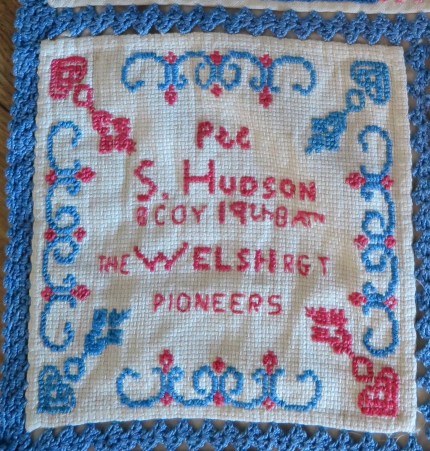
One of 60 squares on a sheet made at the Royal Staffordshire Infirmary in 1917. Each square is embellished slightly differently, and bears the man’s name and regiment. This one was worked by Sydney Frederick Hudson, who survived the war.
I recently watched a news piece about a quilt that had been made by wounded soldiers in 1917. The men were convalescing at the Royal Staffordshire Infirmary, and each had been given the task of embroidering his name, his regiment, and some decorative swirls on a small square of fabric. The 60 squares, all rendered in shades of pink and blue, were then stitched together into a single sheet. A picture exists of two men standing on each side of the finished piece, wearing their “hospital blues,” and looking out at the camera with war-weary expressions.
The stitching of the squares can be seen as a form of occupational therapy, which was quickly gaining recognition from the medical field because so many men had physical or mental injuries, or both. Working on some form of craft could potentially help patients in a variety of ways: it might encourage movement of specific muscles; it might distract the person from the pain he felt; it might give him a sense of purpose and accomplishment; and if done in a group, as with the embroidery sheet, it may foster a sense of community.
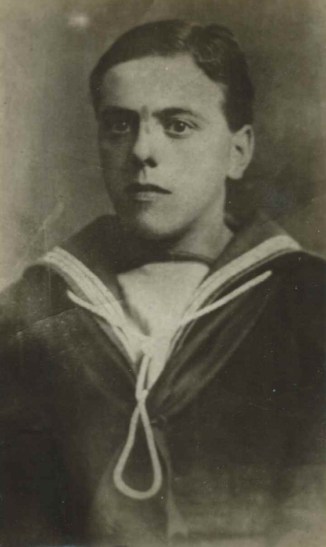
Sailor Joe Deverill, early in the war
The same year the quilt was made, our great uncle, Joe Deverill, was a 19-year-old Able Seaman on board the Mary Rose, a destroyer that escorted ships from Scotland to Norway and back across the North Sea. It was routine work, and the trips were rather dull until one day in October, when the entire convoy was attacked by German light cruisers. Almost everyone on board the Mary Rose perished, as well as many from other ships traveling with her, a tragedy recounted in detail in The Cowkeeper’s Wish. Amazingly, Joe survived, despite his youth and inexperience.
Family lore says that afterwards he took up rug-hooking, and that it soothed his nerves to pull the wool strands through the heavy fabric and watch a pattern emerge. It seems likely that someone gave him this task, and showed him what to do, just as someone showed the men embroidering their squares at the Staffordshire infirmary.
That someone was likely a woman who worked as a “ward aide.” Canadian women did groundbreaking work in this field, and according to Judith Friedland, author of Restoring the Spirit: the Beginnings of Occupational Therapy in Canada, many were either artists or teachers, well suited to helping the men learn simple craftwork that would build their self esteem and keep their minds and hands busy. The tasks turned out to be a crucial part of their recovery. A 1921 New York Herald article raves about the ingenious work going on at Fox Hills Base Hospital, lead by “a competent woman instructor.” The author describes walking through the wards and coming upon “men with powerful big frames except for a missing leg or a twisted arm or a hole in the neck. Each one has his head bent over the bed picking up little beads and stringing them out endlessly into something that looks as though it was going to be a shopper’s purse.” He asked one of the men if the work was hard on the eyes, and the man answered, “It’s only hard on one of them. … The other’s glass.”
England’s Imperial War Museum holds some lovely examples of work made by soldiers as a form of therapy. There are hand-painted fretwork figures of politicians and nurses and soldiers; embroidery samplers; and decorative envelopes pieced together from newspaper. There are haunting pieces in the collection as well. The rings below were considered “trench art” and incorporate a fragment from a German aluminum nose cone and an eagle cut from a German button. They were collected by Alice Rapley Wood, who served as a nurse in France from 1914 to 1916 and later worked at Summerdown Convalescent Camp at Eastbourne, which treated occupational therapy cases. It was here that the rings were made. So far I haven’t unearthed much about Alice herself, but she seems like a woman ahead of her time. She had artistic leanings and painted miniature portraits. On the 1911 census, she is listed with her second husband (having divorced the first), who was a piano manufacturer’s manager several years her junior. She makes a point of noting her own occupation as “artist.” In the decades following WW1, she appears in the Physiotherapy and Masseuse Registers, so she definitely continued with her work long after the war was over. The war had brought an incredible amount of suffering, but also profound and wonderful changes in the lives of women like Alice.
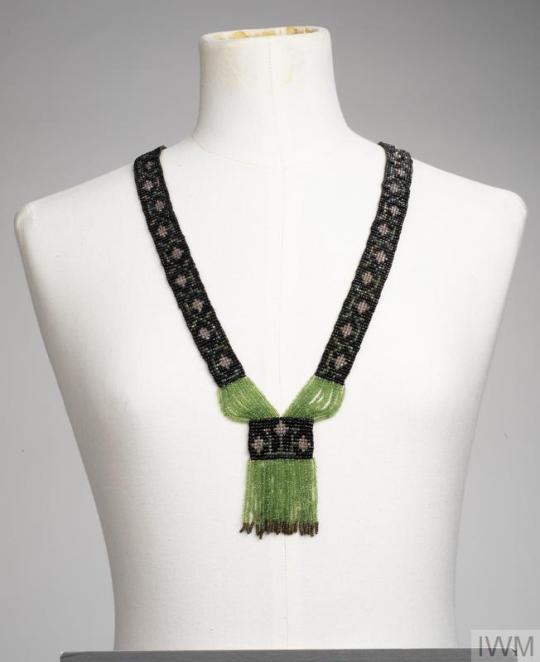
Among the most beautiful examples of occupational therapy in the IWM collection are the intricately beaded necklaces made by Walter John Cressey, a private with the Middlesex Regiment who convalesced at Queen Alexandra’s Military Hospital in London. Cressey was blind and had lost four fingers as the result of gassing. What painstaking work it must have been to make these necklaces, with their tiny beads strung into a long waving pattern, and how sad to never be able to see them. And yet: how brilliant to construct something as a means of healing from so much destruction — to stitch, string, mould, weave, paint, paste, and knit in order to put things together again after such a painful time in history.
In 1884, Cassell’s Household Guide to Every Department of Practical Life: Being a Complete Encyclopaedia of Domestic and Social Economy — whew! — purported to share everything the average housewife should know to run an efficient household. At 396 pages, it contained articles about how to make paper chains for Christmas decoration, how to pickle lemons and how to deal with the dreaded influenza, the cause of which, Cassell’s noted, “has been attributed to a deficiency of ozone in the atmosphere, or to an alteration in the electrical conditions of the earth.” There was a whole section dedicated to that timeless and contentious topic “The Rearing and Management of Children,” and another called “Odds and Ends,” which offered advice on cleaning “the fur” from the insides of bottles, and also included “Facts Worth Knowing about Glue.” According to Cassell’s, glue should be purchased when the weather is hot, for glues of inferior quality would then reveal themselves by their soft texture. “Glue that is not perfectly hard,” the guide stated, “… is of inferior quality, and should be rejected, for it does not hold so well, and is liable to become putrid.”
Cassell’s was a treasure trove of information for the housewife of the Victorian period and beyond. Originally published in 1869 in four volumes, it was reprinted in 1884 and again in 1911, by which time it had grown to six impressive volumes, included illustrations and 22 coloured plates, and had pared its name down to Cassell’s Household Guide: A Complete Cyclopaedia of Domestic Economy.
Advice could be had from Cassell’s Guide on ailments like “Housemaid’s Knee.”
Of course the advice dispensed changed with the times. The 1869 edition contained five mentions of crinolines (that voluminous underskirt of wires and starched netting), warning about “severe burns, such as arise from the clothes taking fire” — so-called “crinoline accidents” — and “Housemaid’s Knee,” a condition aggravated by kneeling on the crinoline’s wires. By the time of the release of the 1884 version of the guide, crinolines had dropped out of style, and Cassell’s included just one reference to the fashion craze.
But who was the knowledgeable Cassell, expounding with equal authority on ladies’ garments, the treatment of gall stones, and how to make Meg Dods’ stuffing (“the liver parboiled and chopped, if in a sound state”)?
John Cassell was born in 1817 at the The Ring O’ Bells pub, Manchester, where his father was the landlord. What opportunity he had for schooling came to an end when his father was seriously injured in a fall and could no longer work, and a few years later, died. In his teenage years John worked at first in a textile factory, and then later, showing some skill and promise, was indentured as a carpenter’s apprentice. But John was motivated beyond merely learning a trade. The Fireside Annual, published in 1882, tells us that even as a young man, John was “determined to educate himself, to break down the trammels of class ignorance, first of all in his own case, and, that once accomplished, to assist with all the energy he possessed, his brother workmen to do the same.” After putting in a hard day’s work, evening studies were difficult, but eventually he acquired “an extensive acquaintance with English literature, great general information, and a fair mastery of the French language.” But what stood him in greatest stead was what he learned from his fellow workers in the carpenter’s shop, “for here he gained an insight into … the struggles, privations, and miseries, as well as the hopes and ambitions of the working classes; and this knowledge was carefully stored up until he should, at a future time, see some way of firing their minds and ameliorating their condition.”
Eager for new ideas and yearning for a worthy cause, he chanced to hear Joseph Livesey, leader of a temperance group that advocated abstinence from the evils of drink, and he was drawn to the movement. Livesey was equally impressed by Cassell, recalling their first encounter in a Manchester lecture room. “I remember quite well … his standing on the right, just below or on the steps of the platform, in his working attire, with a fustian jacket and an apron on — a young man of eighteen, in the honestest and best of uniforms — his industrial regimentals.”
John put all his energies toward the cause of temperance, but he was practical too, and understood that except for the privileged few, lecturing didn’t put food on the table or pay the rent. Looking both to find work as a carpenter and to further spread the word of the temperance mission, John set his sights on London, and like his contemporaries, our own Benjamin and Margaret Jones, walked the length of the country to arrive in the city in October, 1836. Within a few days he’d found his way to the New Jerusalem Schoolroom in Westminster Bridge Road and delivered his first public speech on temperance, appearing to an observer as “a gaunt stripling, poorly clad, and travel-stained; plain, straightforward in speech, but broad in provincialism.” He came to be noticed by John Meredith, the founder of the London Temperance Mission, a man considered “the Napoleon of the temperance warfare,” and whose goal it was to “cover the whole country with temperance influence.” Meredith, though, did not have the gift of oration, and had difficulty delivering his message attractively, but in Cassell he had found an eloquent speaker — young, enthusiastic and energetic. Cassell became a paid temperance agent, trudging from town to town, shaking a rattle to draw attention and then hopping onto a crate to call out against the “vices that sat like skeletons beside half the hearths in England.” His zeal drew many converts as well as sneers and derision, but in Lincolnshire it attracted a woman named Mary Abbott, and their marriage signalled the end of Cassell’s days as a circuit lecturer. Cassell remained a strong advocate for the temperance movement, though, and with money Mary had inherited from her father, the couple settled in northwest London, and John began a tea and coffee business, partly because he recognized an untapped market, and partly for philanthropic reasons. As a penniless youth and later as a visitor to poor homes and villages, Cassell knew that tea and coffee — obvious temperance drinks — were expensive and not readily available, and that the much cheaper beer and gin filled the poor man’s mug. Selling cheap tea and coffee to the masses would not only promote sobriety but would be a good business.
He was right, and so successful that “Cassell’s shilling coffee” became a household staple, and John found himself with an excess of money and leisure time. He bought a used printing press and began to dabble in publishing, printing temperance tracts and pamphlets, and experimenting with illustrated covers, which he noticed sold better than those without. His first publication was a little magazine called the Teetotal Times, and he followed that with an attempt at a weekly paper called The Standard of Freedom which advocated for freedom in religion, and reflected Cassell’s “courageous and independent mind.” But he was most successful printing cheap educational books, and a newspaper that he called The Working Man’s Friend, which “did not patronize, give itself airs; nor did it play down to the lowest intelligence. It was full of sympathy and understanding of the working man’s life.”
Cassell’s expanded, moving premises and growing its list of publications geared towards and affordable for the working man. In 1852 the company published a 26-volume work entitled Cassell’s Library, with a variety of authors contributing pieces like the “Account of the Steam Engine,” and a “Natural History of Man.” It sold cheaply, meeting its intended audience, and was followed immediately by the Popular Educator, the “crown and culmination of John Cassell’s experience and judgment of the needs of those to whom general education had been denied.” Weekly issues included lessons in botany, geography, geometry and French, as well as ancient history, architecture and arithmetic. It was “a school, an academy, and a university all in one… [arousing] real wonder in the minds of the reviewers who wrote about it.” Its editor, Professor Robert Wallace of Glasgow University, wrote of the weekly, “It cannot be but pleasing for us to reflect that each successive week nearly 100,000 families are undergoing a course of useful instruction by means of this periodical.” Popular Educator had quickly become a national institution, and classes formed to expand on the lessons introduced in the publication.
But what, then, of Cassell’s Household Guide? By the time it was published in 1869, replete with the illustrations and diagrams that John Cassell had understood were so important to the working-class appeal of his publications, the man himself was dead. His early demise in 1865 at the age of 48 was attributed by some to “his closely continued application to … business, and the anxiety it entailed,” but in fact he’d succumbed to “an internal tumour,” the effects of which had been noted for many months in his loss of strength and general ill health. His name was “a veritable household word” by then, and Cassell’s itself soldiered on in his absence, continuing in the tradition he had begun, and building “an Empire of literature in the hearts and homes of the working man.”
♦
Sources
Cassell’s Household Guide, Cassell, Petter and Galpin, London, 1869.
The Fireside Annual, Home Words Publishing Office, 1882.
The Story of the House of Cassell, Cassell & Co. Ltd., London, 1922.
The History of the Temperance Movement in Great Britain and Ireland, by Samuel Couling. William Tweedie Co., London, 1862.
“Death of Mr. John Cassell,” Carlisle Journal, 4 April, 1865.
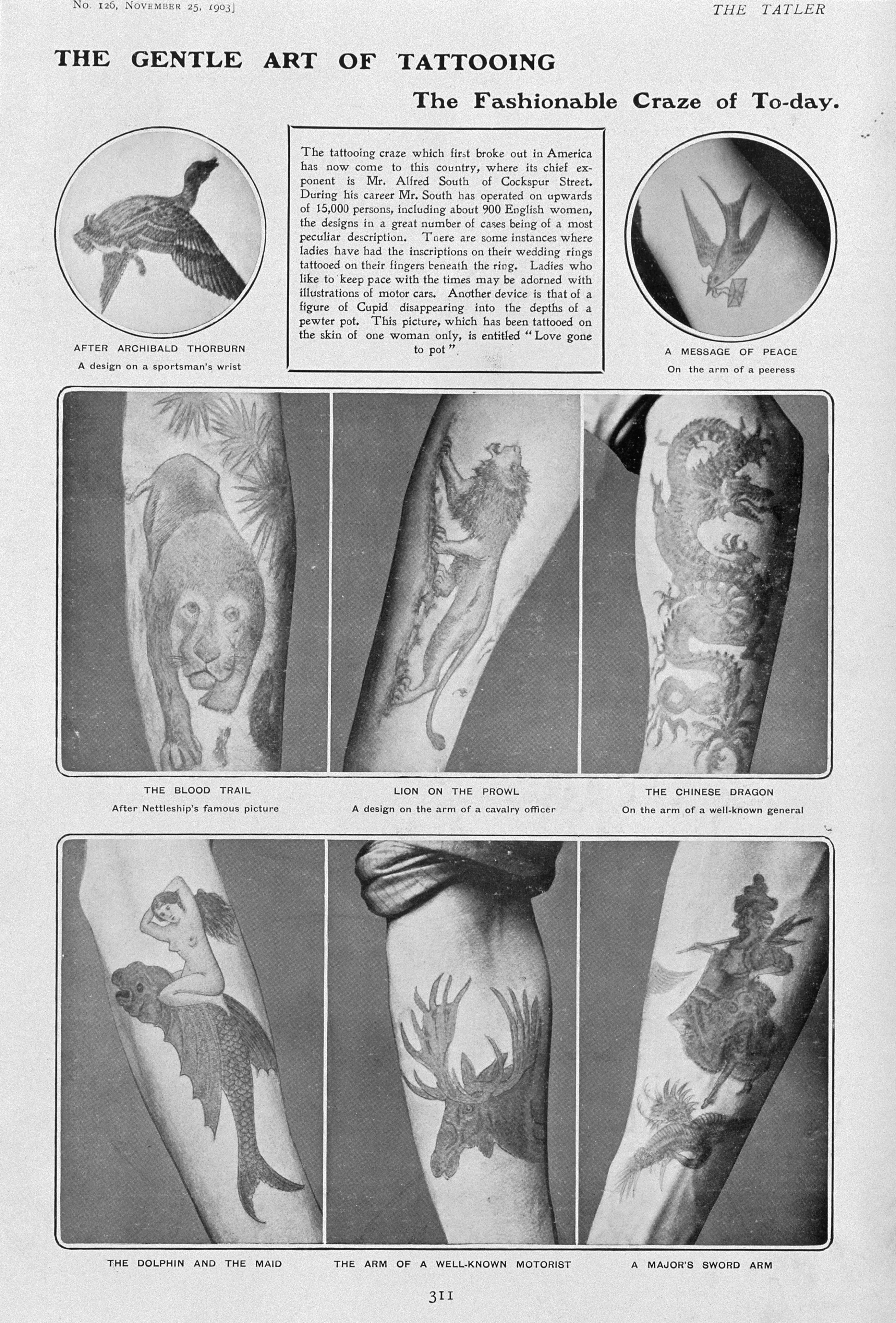
In 1903, Tatler magazine featured this spread on tattooing, “the fashionable craze of to-day.” The work was that of tattoo artist Alfred South, who claimed by that time to have inked images on no less than 15,000 people, 900 of them English women.
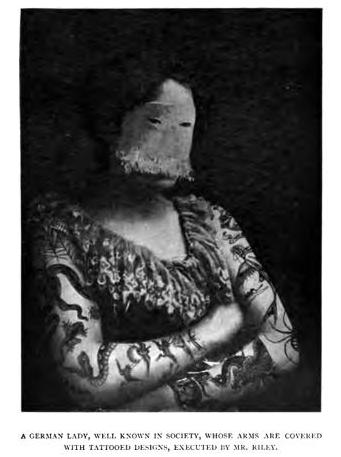
An emigrant to England, South was born Alfred Charles George Schmidt in Karlsbad, Bohemia, and seems to have begun using the name South some time in the 1890s, when his tattooing career began. His big break came in May of 1898, at the Royal Aquarium, an amusement palace of sorts, with tightrope walkers, high divers, human cannonballs, and hypnotists. That spring, fellow tattooist Tom Riley had to step away from his busy booth there in order to deal with what the London Evening Standard termed “trouble with his wife, who wanted to poison herself.” (Flo Riley was frequently dubbed Tom’s “Tattooed Marvel” and was “covered with many beautiful designs in seven colours.”) South stepped in and must have quickly made his mark on the tattooing scene, for according to the Standard, Riley, upon his return, was so incensed at the thought of upstart South stealing his clients that soon he began to publicly harass South in the halls of the Royal Aquarium. South pressed charges, and Riley (whose wife survived her ordeal) was ordered to keep the peace. From then on, regular newspaper ads appear for South’s services, promising “any design, all colours” — and how it must have rankled Riley that sometimes South’s ads showed alongside his own.
This image comes from “Pictures on the Skin,” a lengthy article about South’s rival, Tom Riley. It appeared in The English Illustrated Magazine in 1903, the same year Tatler published photographs of South’s designs.
By 1899, though, South’s livelihood was threatened when 21-year-old Louis Montgomery Forbes died of blood poisoning shortly after South had tattooed him. Papers carried headlines about the “peculiar circumstances” around Forbes’ death, and the dangers of tattooing, and South was called to testify at a coroner’s inquest.
Forbes had come to South for tattoos on several occasions; this time he requested a lion on his chest, a procedure that took 10 hours, according to South’s testimony. Every couple of hours, South asked Forbes if he’d like a break, but Forbes always declined. While South worked with his needles, Forbes drank 14 whiskies to dull the pain, and afterwards the two went out together for a bowl of soup and then to a public house to show off the lion to a friend. They parted ways, and that was the last South saw of him.
Forbes returned to his cousin’s house, and the next day felt unwell. Fourteen whiskies might do that to a person, so perhaps he was not at first alarmed. He told his cousin about receiving the tattoo — that it had taken a long time and been quite painful, but that he didn’t attribute his illness to the procedure. A doctor was called, but he continued to grow worse. Most likely he felt dizzy and disoriented; his heart raced; his skin turned clammy and pale, and he drifted into unconsciousness. Three days after receiving the tattoo, he died. Other doctors were called in to give their opinions of the cause of his death, and while all agreed it must have been blood poisoning, none could say it had anything to do with South’s tattooing.
For his part, South claimed that by this time he’d tattooed more than 5,000 people and never had a problem. He used a fresh set of needles for each customer, and during procedures he placed them in carbolic oil. He used only the best quality Chinese ink, which he produced as part of his testimony, and offered to eat it to prove his claim, but the coroner didn’t think that necessary. “The jury reached a verdict in accordance with the medical evidence, but attached no blame to the tattooist.”
South went on with his work. As he told one reporter, “You’d be surprised to know the number of people who come to me to be tattooed. And from all classes. I’ve tattooed lords and ladies of high degree, doctors, barristers, actors and actresses, men and women of all professions, just as I have tattooed soldiers and sailors and working men. What is it that makes them want to be tattooed? Well, I suppose it’s just a fad — that’s my only explanation of it.”
In 1906, South made the news again, telling of his recent exploits in Vienna, where he’d tattooed the arm of a tiger tamer. “His conditions were that I should go inside the cage and take my design from an unfettered animal. … I had nicely arranged all my apparatus on a table inside, and was just about to begin the sitting, when, without any warning, the brute leapt at me. I stood aside, only to see my table crushed under the heavy weight of the animal. Without waiting, I rushed outside the iron door, but after a while one of the attendants told me that everything was all right again. Well, I thought that one can die only once, and re-entered the cage, and after one-and-a-half hour’s sitting I had accomplished my task.”
Over the years what seems to have changed most was the kind of tattoo people desired. By January 1914, South was offering “your favourite horse, dog or cat tattooed upon your arm, neck, shoulder or ankle.” The Daily Mirror carried an image of him at work on a client. South sits in his lab coat, a dowdy, balding, somewhat round man who resembles Alfred Hitchcock. He holds his needle against a woman’s arm; she’s watching him work, and smiling a little tentatively, but South’s eyes study the dog she holds — a fluffy white lap dog — who in turns stares out at the camera with a seemingly baffled expression.
When war erupted later that year, two of South’s sons enlisted, surely thankful their father had long ago stopped using Schmidt as a surname. The younger son’s involvement was brief — just 18 and a Boy 1st Class on board the ship Edward VII, he was blown overboard in a gale and lost to the sea. His record shows his initials, LS, were tattooed on his upper left arm; the work of his father, perhaps — but simple and understated compared to Louis Forbes and the Tattooed Marvel.
Tattoos had long been popular among soldiers and sailors. In the box for “Wounds, Scars, Marks &c.,” service records note a plethora of horseshoes, crosses, women’s names, clusters of forget-me-nots, anchors, snakes, birds, and shamrocks. By 1915, women and girls — “who in ordinary times would not dream of being tattooed” — were coming to South wanting tattoos to remind them of a man who had gone off fighting. “The usual request is for a regimental badge to be etched on their arms, sometimes with the words ‘I love’ or ‘Yours forever.'”
Curiously, the desire for these “indelible mementoes” was something that seems to have puzzled him over the years. He regularly fulfilled requests for sweethearts who wanted each other’s portrait tattooed. But he mused, “it’s a bit awkward if they both should happen to change.” One can imagine him shrugging and simply carrying on. By the time of the First World War, South had been tattooing for some 20 years, and must have marveled that “the fashionable craze of to-day” was also the craze of tomorrow, of the next day, and the day after that.
Among the most treasured research tools we employed to write The Cowkeeper’s Wish are the photographs, letters, postcards and documents passed down through the generations. Holding something so old in your hands, you inch just a bit closer to the history you’re seeking, even if the object doesn’t tell you much more than you already knew. Likely, though, it does offer more than you first think.
The 1877 card above, for instance, comes from an offshoot in our family tree, and is typical of mourning cards of this period: three by four-and-a-half inches, made of thick paper with a striking black-and-white design, embossed with symbolic, funereal images. For something made of paper, it feels heavy in the hand, and looks elegant and important. In Victorian times, mourning cards were just one small part of the strict rituals around death, put in place by the upper crust but closely observed by the poor as well. They were sent out after the funeral had happened, and meant to be kept as a memento of the person who’d died.
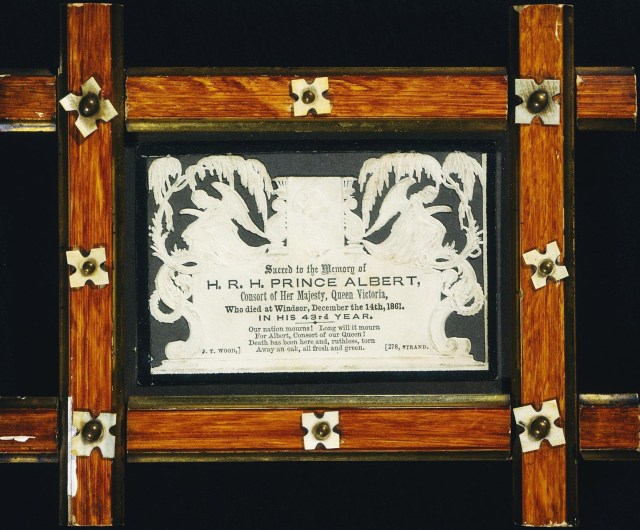
Memorial card for Prince Albert, by J. T. Wood, 1861. Courtesy Victoria & Albert Museum
This card for Queen Victoria’s beloved husband Albert was made in 1861, and unlike our family example, was created for the wider public as a way for them to participate in mourning the prince. According to the Victoria & Albert Museum, “Death was highly visible in Victorian culture. It was a time for communal feeling, studied response and ritual. People were encouraged to give public expression to their grief, and an industry of mourning dress and mementoes provided visible reminders of the dead. The death of Prince Albert in 1861 contributed to the cult of mourning that lasted for much of the 19th century. Part of the ritual was to send out beautifully embossed mourning cards in memory of the deceased. This card for Prince Albert … was mounted in a cheap frame for display in a modest room.”
Though the images are similar, the woman remembered in our family example — Mary Ann Bedford nee Bright — was of much humbler means. Married to a shoemaker, she worked at different times as a boot binder and a seamstress, and had 10 children. She lived with her family in Mile End, London, where her husband engaged the services of a local undertaker when she died. The name on the mourning card, Moses John Hickman, first appears in newspapers in 1845, under the heading “Apology.”
I, the undersigned, having exhibited several libellous Placards concerning Mr. Moses John Hickman, … Undertaker, respecting a disputed account between us, and which reflected on his character and credit as a tradesman, and he having commenced an action for libel against me, has consented to withdraw it upon my making this public apology, and paying his law costs. Geo. Henry Kelly, Printer, 1, New Road, St. George’s, East.
The notice doesn’t reveal what the dispute was about, but Hickman seems to have been conscious of maintaining a solid reputation thereafter, for the many advertisements that appear over the next decades promise “economy and respectability in funerals,” with “good black horses and proper fittings always used.” Just days after Mary Ann Bedford’s death, in January 1878, Hickman took out a longer ad, guaranteeing that “obsequies [would be] performed with respectability and decorum.”
CAUTION. — I beg to inform the Public that some Undertakers and others have issued a facsimile of my Prospectus, thereby deceiving them, by relying on Extras to make up their bills, instead of keeping to the sum specified in their advertisements. I have no connexion with any other establishment, and am only surprised that, in the present enlightenment—although a sense of duty might not restrain—Education does not make men abashed at the thought of being guilty of so mean an action as to rely on the merits of my productions to gain public favour.
Following the caution, he laid out the specific costs he charged for different types of funerals. A “walking funeral” for a grown person was £1/10; a carriage funeral, “with coffin and all requirements,” was £2; if you wanted to add a separate hearse and mourning coach, the cost went up to £3; add pairs of horses and the charge was £4; and up it went until you got to £17 for a more lavish display with “leaden coffin, stout elm shell and case covered with fine cloth, hearse, … two mourning coaches (pairs), ostrich plumes and velvets, lid of feathers, mutes, pages, &c.” These seem like tiny amounts to us now, but they were large sums for the working class at the time.
None of this, of course, tells us much about Mary Ann Bedford herself — or even about Moses Hickman. Maybe he did engage in shoddy business practices, despite his indignant statements. Or maybe was as upright as he sounds; after all, his career endured for decades. But the little clues uncovered here support the notion that funerals were big business, and that people were taken advantage of in their time of grief, not only due to the rigid customs of the times, but due to dishonesty and greed. Was Mary Ann Bedford’s family swindled? Or were they happy with the services performed to say goodbye to this 47-year-old wife and mother? These peripheral clues give some context as to the environment she lived and died in, and the concerns her family might have had regarding her funeral and burial.
Doris Deverill and Martha “Bebbie” Bedford, around 1922.
Another clue lies in the very existence of the card, so many years after the death. Mary Ann Bedford’s daughter, Martha, was about 12 years old when her mother died. She never married or had children of her own, but when a dear friend (also Mary Ann!) died in 1917 when she was in her mid-forties, Martha took in the woman’s 10-year-old daughter and raised her as her own.
That girl, Doris Deverill, was our grandmother — an orphan like Martha — and it was she who kept the mourning card after Martha died, so that it continued to pass down through our own family, though we have no blood link to the Bedford line. That Martha Bedford and Doris Deverill both lost their mothers at a similar age was likely part of the special bond between them.
♦
“Apology.” Morning Advertiser, 3 November, 1845.
“Respectable Funerals.” East London Observer, 5 January, 1878.
Browsing through the 1869 Cassell’s Household Guide to Every Department of Practical Life, I came upon an intriguing recipe “To Render Ladies’ Dresses Incombustible.” If you mixed your whitening with starch, you could make “lace, net, muslin, gauze, or any other light stuff, perfectly inflammable. As white dresses are much worn at evening parties, where fires are often kept in the grates, and numerous ladies have been burnt to death by means of their dresses catching light whilst dancing, it is hoped this useful receipt will not be forgotten by any lady in the habit of attending balls and parties.”
Voluminous dresses were fashionable through the 1850s and 1860s, and a search through newspapers of that period turns up a shocking number of deaths from the garments catching fire. It’s thought that something like 3,000 women perished this way in England alone. Both Cassell’s advice and the lithograph above — labeled “the horrors of crinoline & the destruction of human life” — make us think of well-to-do ladies twirling in beautiful ballrooms before tragedy strikes; but all classes were caught up in the fashion craze Punch called “crinolinemania,” and the sparks of flame didn’t care if you were a colonel’s wife, like Anna Maria Grant, or a servant girl, like Mary Anne Winterbotham.
Anna Maria Grant was sitting in a London drawing room on Christmas Day in 1862. It was 11 o’clock in the morning, and a fire kept the winter chill away as she celebrated the holiday with friends. There was a bird loose in the room, and as she turned to follow its flap and flutter, the edge of her dress caught fire. At first she tried to tear off the clothes, but the flames spread quickly, and she was unable to escape them. Within two or three minutes, her clothing had entirely burned away, with the exception of her stays, and she had suffered “fearful injuries.” Two doctors were called in, and tended to her until 7 that evening, when she finally died from her wounds. The coroner lamented that crinolines had become a constant theme at inquests.
Punch, 1862. “Bother Missus! She wears it herself, and I don’t see why I shouldn’t.”
In November 1861, 22-year-old Mary Anne Winterbotham was a domestic servant working in a doctor’s home in London’s West End. She was cooking dinner when her dress caught fire and she ran out into the street, all alight and screaming for help. A crowd quickly gathered, and tried to tear at her fiery dress, and smother the flames with coats and rugs. Eventually the fire was put out, but Mary Anne, like Anna Maria, had suffered horrific injuries that her body could not withstand. At the coroner’s inquest, the jury found she had died from accidental burns, and added they could not part without expressing their “horror and disgust” at persons who wore crinolines when their duties required them to work with fire.
One wonders — was it easier to express “horror and disgust” for Mary Anne than for Anna Maria, whose ladylike duties required her to sit by a fire on Christmas morning?
Lady — Oh my! How shall I get past? Gentleman — Halloa there, my good fellow! Open the turnpike gate!
Crinolines were constantly in the press in these years. Their wearers were teased and ridiculed for the indecent way such dresses exposed them when they bent forward; they were cautioned about the dangers of moving around in such cumbersome clothing. Just a couple of weeks before Mary Anne Winterbotham’s death, Florence Nightingale wrote that she found it “alarmingly peculiar” that at a time when “female ink-bottles” were so regularly espousing women’s overall usefulness to the world, women were dressing themselves in a way that rendered them useless for any duties at all. She called the crinoline “an absurd and hideous costume,” and wished the registrar-general would state the number of fatalities it had caused.
But still, the trend persisted. In 1869, a piece titled “Who Killed Crinoline?” said good riddance to the fad, and marvelled that it had lasted so long. “Some say crinoline was swept away by a grand tidal wave of common-sense. If so, the wave took about ten years to gather its volume; and we should be glad to know what arguments or recommendations common-sense possessed in the tenth year which it had not in the first.”
We confess to regarding crinoline as at once ugliness and a nuisance; but that the ladies will regard as only the general opinion of us “male creatures,” and they have proved that they do not care about that. The attachment to crinoline must be very strong, for it has stood what it most difficult to withstand—ridicule. Good things are often put down by sarcasm; but here is an ugly thing—a monstrosity—a something which makes the lower half of a lady’s figure look like a damaged diving bell; and the only effect ridicule had upon it, is to cause it to expand to larger and larger proportions, till it threatens to sweep the lords of creation off the pathways, to block them out of church, to hustle them out of places of amusement, and scarcely to leave room for them at home. We should not care so much if a sumptuary law could be passed, prohibiting any but ladies, who are ladies enough not to have anything to do, from wearing crinoline; but everybody takes to the nuisance. Folly is generally spoken of as “light,” but we are inclined to think it must be heavy, for it descends from the highest to the lowest grade of society. This folly commenced with a French Empress, and the other day a beggar woman in crinoline asked alms of us. The vortex a servant maid in the small room of a modest house creates with her wide mailed petticoat is perfectly bewildering, and half alarming. A servant maid has not time to move with the quiet, balloon-like glide, which a lady has leisure for. She must be sharp and quick in her movements; and she drags the chairs, and jostles the table, and puts the dishes in danger, and flounces papers away, as though she was a whirlwind; and when she puts coals on the fire, occasionally carries away the tongs as an appendage to her skirt, the fender only escaping reason of its weight. It says a great deal for the cautiousness of servant girls, that more of them have not fallen victims to crinoline fires. The sufferers in that way have been generally ladies. In factories, the factory lasses, though barefooted, are becrinolined, better fenced than the machinery they work among; and it is a wonder there is not more peril in their skirts than there appears to be. But putting aside ugliness and danger, we have now to contemplate crinolines as plunder baskets. … many crinolines are simply depots for stolen goods. It does not, of course, follow that all people who wear crinolines use them for that purpose; but gives those of predatory dispositions an opportunity of concealing their booty. Lumps of plunder, which would deform the symmetry of the uncrinolined female figure, are carried off without suspicion by the crinolined, pots of jelly and marmalade, pounds of apples and sugar, papers of “sweeties,” are “conveyed” into the capacious receptacle; and we are told that silk, and the finer sorts of yarns, find their way surreptitiously to the same place. Jute, we suppose, has too little value to be in danger. We propose, then, to call crinolines Plunder Baskets. If everybody would do that, we wonder if the ladies would continue to wear them under that name?
Close your eyes and imagine that it’s 10 o’clock on a Saturday evening in London, Ontario. The year is 1928. This is our grandmother Doris Deverill’s world. She is 18, and is somewhere in the same city, perhaps, like you, sitting in a flocked, over-stuffed armchair with her feet curled beneath her.
Doris Deverill around 1928
In your room, the heavy drapes are drawn and a small lamp with a thin silk shade is colouring the room a dusky orange. You’ve just turned the knob on the front of the polished wooden radio set that has pride of place on the floor of your small living room, and it hums and then crackles to life. Strains of a theme song fill the space – This is My Lucky Day – and it’s not lost on you that the song has been chosen with a purpose; first, the word ‘lucky’ provides a little indirect advertising for the show’s sponsor, Lucky Strike Cigarettes, as well as a link to the show’s title, The Lucky Strike Radio Hour, and second, it’s a popular song, having been part of a string of Broadway revues called the George White Scandals, similar to the Ziegfeld Follies.
Immediately following the last notes of the song the voice of the unnamed announcer comes on, his speech clipped and crisp and slightly nasal. “And so begins this hour of dance music, presented for your pleasure by the manufacturers of Lucky Strike Cigarettes. The Lucky Strike Dance Orchestra will be heard in the tunes that made Broadway, Broadway.”
And on cue, the Lucky Strike Dance Orchestra’s bandleader, Benjamin Albert Rolfe, the so-called Boy Trumpet Wonder, introduces the first numbers of the evening, “a real dancing combination.” One of the songs – Bambalina – he calls an “old friend.”
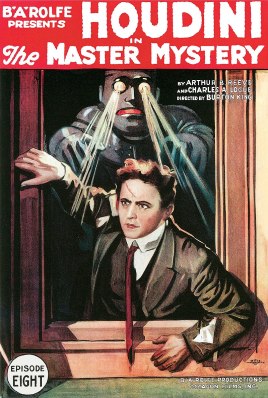
You smile and listen as Rolfe and his orchestra play. His concept of dance music during this time of the late 1920s was that it should “throb and laugh with happiness; it should have the rhythm of a rubber ball, bouncing back, only to fall again, going on and on.” Those words were a fair description of what Rolfe himself had been doing for his entire career up to this point. Raised in Brasher Falls, New York, he’d played piccolo and cornet in his father’s band, performing throughout the eastern United States and Europe. After high school he picked up work as a musical clown in a traveling circus, then joined the Majestic Theatre Orchestra before finally heading the brass instruments department at the Utica Conservatory of Music. But show business was in his blood, and after a run as a bandleader and only marginal success as a vaudeville producer he eventually turned his efforts to movies, forming a production company and turning out more than 50 silent films.
B.A Rolfe produced more than 50 silent films, including this one starring Harry Houdini.
Financial difficulties forced Rolfe out of that business and he took up his trumpet again and began performing as a solo artist. Eventually, inspired by the likes of Paul Whiteman and his “symphonic jazz”, Rolfe put together his own dance orchestra, and found a measure of success on the airwaves as master of ceremonies for the Lucky Strike Dance Hour.
The last strains of Bambalina fade, and Rolfe introduces another number, and after that, a waltz from the operetta The Merry Widow. TheMerry Widow Waltz is already a “famous classic”, but in 1934 French actor and cabaret performer Maurice Chevalier will lend his charm to the film version of the operetta, and an Academy Award win for Best Art Direction will make the music just that much more popular. But for now, Rolfe’s Lucky Strike Dance Orchestra is doing justice to the notes, and you in your comfortable chair sway ever so slightly, dreaming up the feel of a hand at your back, leading you through the imaginary steps.
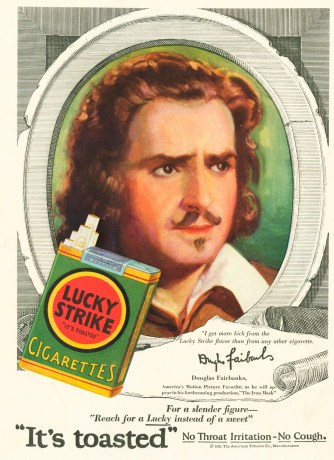
Then the music ends, and without a pause the never-named announcer brings listeners back to the real world, and makes the requisite pitch for the show’s sponsor. Tonight, the script-writers lead with Douglas Fairbanks, a founding member of the fledgling Academy of Motion Picture Arts and Sciences. But you have never heard of an Oscar. The first of those diminutive gold statues won’t be handed out by the Academy for another year, although when they are, it will be Fairbanks hosting the show and shaking hands with his peers when they take their bows. Despite his many and varied contributions to the world of film (he helped start the School of Cinematic Arts in California, and was one of the founders of the United Artists studio), Fairbanks would never win an Oscar himself.
The radio announcer reads his text: “Douglas Fairbanks, America’s motion picture favourite, will soon appear in his new production of ‘The Iron Mask.’ This is a sequel to ‘The Three Musketeers’ with Mr. Fairbanks again playing the part of D’Artagnan.
The characters however are more romantic and adventurous and Mr. Fairbanks considers the picture as a whole to be faster moving than any story he has ever brought to the screen. The manufacturers of Lucky Strikes have requested me to read what Douglas Fairbanks has to say regarding the Lucky Strike Cigarette. Mr. Fairbanks says – ‘I get more kick from the Lucky Strike flavour than from any other cigarette. They are easier on my throat and wind. That’s why I smoke nothing but Luckies. Toasting really means a lot to me. My own experience has proven that toasting not only takes out the bad things but doubles the flavour.’”
You sigh and shift position. The hour grows late, and you want less talk and more music, and don’t care if Mr. Fairbanks smokes Luckies or Camels or even British Consols, which is unlikely, since they are a Canadian brand manufactured in Montreal, and Mr. Fairbanks, of course, is a Hollywood star.
Bandleader Rolfe announces the next couple of numbers, Crazy Rhythm, “a musical impediment of speech,” and Oh Evelyn, Stop Your Devilin, a song from the musical comedy Pom-Pom, and Mitzi’s favourite, according to Rolfe. He doesn’t share more details than that, but you know that Pom-Pom was released 12 years ago in 1916, and starred the “tiny prima donna from Hungary” Mitzi Hajos, whose name, the New York Times advised most helpfully, is pronounced “High-yuss.”
An ad for the 1916 musical Pom-Pom starring Hungarian singer and actress Mitzi Hajos. Despite her early success, mid-life brought work as a secretary at the Shubert Theatre in Brooklyn, NY.
Despite the aids to pronunciation, the “golden haired darling” eventually became convinced that her Hungarian surname would never “roll readily from the American tongue,” and she legally dropped Hajos to become plain Mitzi. But as the Reading Times of Pennsylvania declared, “plain…she could never be, as witness her dressed as a boy in Pom-Pom.”
Two more songs follow, and then the announcer speaks again, this time sharing the endorsement of Lucky Strike cigarettes by yet another famous person, the aviation pioneer Amelia Earhart. The script goes like this: “A short time ago the world was thrilled by the daring Amelia Earhart, the first woman ever to cross the Atlantic Ocean by airplane. Of Lucky Strike cigarettes Miss Earhart said ‘Lucky Strikes were the cigarettes carried on the Friendship when she crossed the Atlantic. We bought a carton in Newfoundland before we took off, because Luckies are best. On a long hard grind of this kind they were real life-savers, and were smoked continuously from Trepassey to Wales. I think nothing else helped so much to lessen the strain for all of us.'” You think about that, and picture the intrepid Miss Earhart earnestly puffing her way through her share of the carton of Luckies, clad in her aviator coveralls, leather cap with earflaps snugged beneath her chin, and wearing clumsy gloves to protect against the cold of the 20 hour flight. Presumably pilot Wilmer Stultz and flight mechanic Louis Gordon had found time to inhale the other two-thirds of the smokes despite fighting bad weather they’d thought had blown them off course, and almost running out of gas. Amelia drew the world’s attention with that trip, although by her own words she was “just baggage” and wouldn’t pilot her solo voyage across the Atlantic until 1932.
Pioneer female aviator Amelia Earhart in a photo taken just before the 1928 flight destined for “any port in England.”
Mr. Rolfe is back at the microphone, introducing five more numbers that float across the airwaves. You are yawning now, but the music is lively and keeps you in your chair, enjoying the beat of the “optimistic little melody, Old Man Sunshine,” and then the even spunkier Tiger Rag. But by the time the theme song plays to signal the end of the show, your eyelids are drooping and your hand props your chin. The announcer bids his listeners good night, and makes one last plug for the show’s sponsor. “This closes the program of one hour’s dance music presented for your pleasure by the manufacturers of Lucky Strike Cigarettes. The tunes that made Broadway, Broadway. Thank you.” But you do not hear those last sentences. You’re asleep, your breath coming evenly, your head tilted back on the cushion of that over-stuffed chair.
♦
Sources
Lucky Strike Radio Hour transcript
Thurlow O. Cannon, “B.A. Rolfe – From Brasher Falls to Broadway to Broadcasting,” in The Quarterly, St. Lawrence County Historical Association, January 1981.
Pom-Pom Coming to the Academy, Reading Times, 8 February 1917.
I’ve mentioned in earlier posts how challenging it can be to find women in a family tree, because they tend to disappear behind their men. During out research for The Cowkeeper’s Wish, one of the biggest brick walls was finding Ellen, our great grandmother’s sister, who left her husband in the 1890s and eventually turned up living with someone else and using his surname, though they had not married. Sometimes women disappear even more completely behind their partner’s name and become “Mrs John Humphries,” erasing every letter of their own identity.
I recently found an example of an elusive woman while engaged in some volunteer work I do for the Imperial War Museum’s excellent Lives of the First World War website. I’ve taken a special interest in the women’s records there, and I was searching specifically for women who’d worked at the Australian Voluntary Hospital in Wimereux, France. I was surprised to come upon a page for Staff Nurse Robert Hannah nee Walter E. C., and wasn’t quite sure where to begin to untangle such a jumble of surnames that could also be first names. I double-checked the original source Lives had used — the women’s service roll at the National Archives — and the name appeared the same way there.
Since it’s highly unlikely that a nurse in 1915 was named Robert, I thought the names were simply transposed, and should read Hannah Robert nee Walter. I searched for a marriage record during the war that would confirm that suspicion, but nothing fit. And then I remembered the “E. C.” that I’d ignored on the entry the first time around. I checked the National Archives record again, this time viewing the digitized version, and saw a tiny crucial “Mrs” beside the name, and left out of the transcription. Mrs. Robert Hannah? That made more sense. I popped in a new search, still within the Lives database, and found that Ella C. Walter had married Robert C. Hannah in Kensington, London, in 1917.
That the marriage took place in London was another bonus, since Ancestry holds those digitized entries of Church of England Marriages and Banns. Here I was able to find yet a little more about the woman so recently known as Robert.
When they married on January 6, 1917, at St. Phillip’s Church, Ella Clarice Walter was a 39-year-old spinster, living at 4 Richmond Mansions, Earl’s Court. Her father’s name was John Charles Walter, and though he was now deceased, he’d been “civil servant, Melbourne,” according to the certificate — another Australian connection for the woman who’d worked at the Australian Voluntary Hospital. Her new husband was considerably older than she was; a widower named Robert Campbell Hannah, he gave his occupation as “gentleman,” and he resided at the Thackeray Hotel in Great Russell Street.
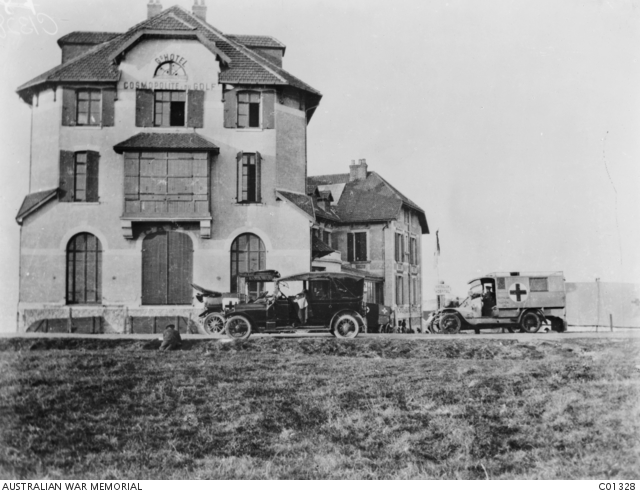
Searching backwards now, I found Ella living on her own in London in 1911, a single 30-year-old woman of private means, born in Melbourne, Australia, a British subject by parentage. What brought her to London I don’t know — but being unmarried, Australian, and keen to assist with the war effort, she was an early recruit for the hospital founded by Lady Rachel Dudley, wife of the Australian governor-general, first located at St. Nazaire, France, and soon moved to an old hotel in Wimereux. The medal roll shows that Ella joined the hospital staff late in August 1914, with the war not even a month old.
In a 1915 piece about “the good work [the AVH] is doing at the front,” writer Katharine Susannah Prichard describes the setting, and brings the photo above to life:
The Winter quarters of the Australian voluntary hospital are in a great, rambling, muddily-white French hotel. When first you see it, you want to draw it as it stands against the sea, under a clear, shining sky. You feel you want to use a rough chalk for its vermilion roof, and for its shutters and doors that are vivid, apple-green. Beyond it stretch the dunes, vague and formless, with their coarse, wind-threshed, bleached grasses, and behind it spreads a scattered toadstool growth of white-walled, red-roofed cottages. Gris Nez forms a rampart on the north, and there is a deserted, red-roofed village along the coast. The Picardy landscape the hospital stands in is so tranquil in a peaceful, pastoral way, that it is almost impossible to believe, that only a few miles away all the damnable business of war is going on.
Clockwise from top: Elizabeth Mundell, Ella Clarice Walter, Mary Rawson, and Patience Outram Anderson.
When the staff first moved into the hotel, they’d barely had time to settle when word came that a convoy of wounded was on its way. Ambulances began arriving even before the beds had been made to receive the wounded. “They kept on arriving,” writes Prichard, “a continuous, slow stream of khaki-covered cars, with a red cross blazed across them. They came over the brow of the hill, and filed past the hospital from 10 in the morning until after four in the afternoon.” Soon stretchers lined the corridors, and 145 men required the staff’s careful attention.
Knowing Ella’s name wasn’t Robert helped me to find this lovely picture of her and some of her colleagues, posing in uniform. She and the other women depicted are each mentioned, albeit briefly, in the unit’s 1915 war diary. In May, the diary tells us, Ella contracted the measles (as did Patience), and in August, she had a brief stay at a rest home in Hardelot. The diary mentions many of the women resting there, and the Australian War Memorial holds a picture that suggests they were happy to go. I don’t see Ella in the Hardelot photograph, and I lose track of her now until her 1917 marriage to Robert Hannah. What sent her back to London, and was she nursing there as well until she married? These answers might surface if I keep searching. But it feels satisfying to have made even some small discoveries about this stranger, to sort the name and put a face to it, and to reunite a nurse with some of her colleagues from a century ago.
WIMEREUX, FRANCE, 1915. “SICK NURSES OFF TO REST HOME AT HARDELOT” WAITING IN A MOTOR CAR OUTSIDE THE AUSTRALIAN VOLUNTARY HOSPITAL, FORMERLY THE GOLF HOTEL. (DONOR D. MASSY). AWM, P01064.027
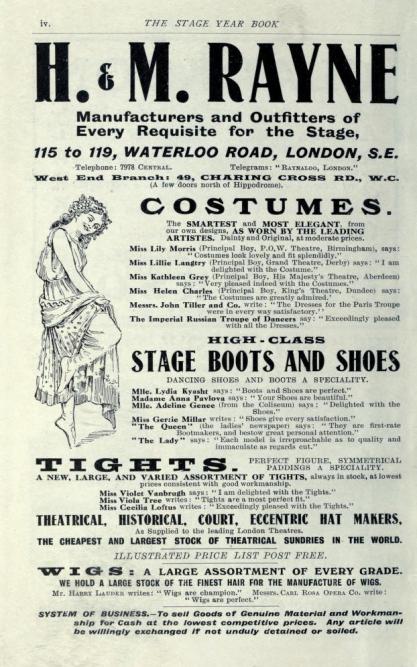
Our great grandparents, Harry and Mary Anne Deverill, moved out of the Borough to Lambeth around the time that Mary Anne’s sister Jennie and her husband Richard Vanson did the same. Richard and Jennie and their three girls lived just north of Harry and Mary Anne, in a block of artisans’ dwellings on Burdett Street off Westminster Bridge Road. You could follow the road west and travel across the Thames to a different world: the Houses of Parliament and the Clock Tower were there, with Westminster Abbey and Buckingham Palace just beyond. Like Harry and his brother Jack, who’d been in trade together, Richard disappeared from commercial directories around this time, so it seems he’d lost or given up his business as a boot repairer. But his new home in Burdett Chambers was very close to H & M Rayne, shoemakers to the theatrical crowd and, according to The Stage Year Book, “manufacturers and outfitters of every requisite for the stage.”
H & M Rayne opened for business in London in the mid-1880s, a collaboration between Henry Ryan and his wife Mary Clarke. Born in 1863 in Devonport, the son of an Irishman who’d joined the British Army, Henry lived for a time in India, then as a young man larked about the United States and France before returning to England. Mary was a Chelsea lass, and when she and Henry married, it was at the height of the Victorian fascination with all things theatrical. The advent of gas lighting, improved modes of transportation affordable to the average citizen, and a working class with a spare penny meant music halls flourished, packing all sorts of customers into venues such as the Alhambra in Leicester Square, or The Borough Music Hall on Union Street in Southwark. Henry and Mary saw an opportunity, and opened their doors at 115 Waterloo Road, selling “high-class stage boots and shoes” to music hall performers.
Actress Henrietta Crosman in costume on the November 1902 issue of The Theatre magazine.
Henry was an astute businessman, and was surely well aware that anti-Irish sentiment was running high around this time, as the Irish nationalist Fenians had begun a “dynamite campaign,” targeting tube stations, the offices of Scotland Yard, and Westminster Abbey. Henry took an approach that would be copied by king and commoner decades later when England went to war against Germany, and changed his name from the Irish Ryan to Rayne, which he thought sounded French and would appeal to prospective customers. Presumably he also believed people would not frequent a shop co-owned by a woman, for although the ‘M’ in H & M Rayne was Mary, they prefaced the company name with Messrs, suggesting this was a partnership of men. They placed notices in publications like The Music Hall and Theatre Review, claiming to have received orders “from all parts of the world, the latest one coming from so distant a land as sunny Roumania.” They advertised in newspapers and trade journals touting their costumes and wigs, and exclusive products like their Manx perfume, and mona powder, “guaranteed to give the skin a velvety softness, and the velvety bloom of youth. Not too young, you know, but about eighteen.”
H & M Rayne’s full page advertisement in the 1912 issue of The Stage Year Book.
Before too long the stars of the music hall and theatrical world were H & M Rayne’s devoted customers, among them actresses like Gertie Millar, one of the most photographed women of her time, and Lillie Langtry, once mistress of the Prince of Wales. Russian prima ballerina Anna Pavlova bought Rayne’s dancing shoes, and the company featured her compliment in one of their advertisements: “Your shoes are beautiful.”
Gertie Millar as Pierrot in 1909, and one of Rayne’s devoted clientele.
It’s possible our Richard Vanson worked for Rayne’s, hunched over a bench fixing shapely heels onto embroidered satin uppers, or attaching buttons to smooth leather shanks. But any record suggesting such a detail is long gone, and Richard died in 1911, just before the census that confirmed his niece Olive was employed at Rayne’s as an “apprentice theatrical costumer,” while his daughter Alice tried her hand there at “apprentice perruquier,” learning to create hairpieces and elaborate wigs, and, indirectly at least, receiving the accolade from renowned Scottish vaudevillian Harry Lauder that “the wigs are champion.”
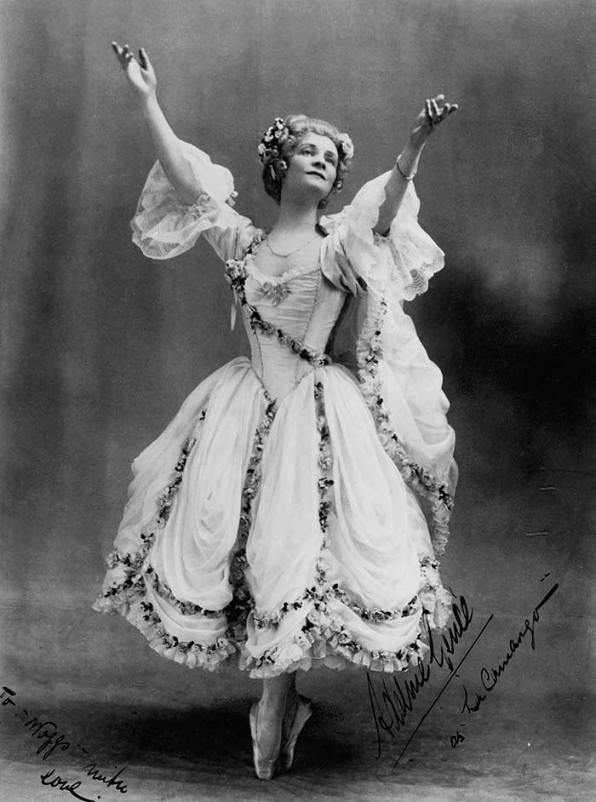
Nineteen-eleven spelled the end for Mary Rayne too. She died on the 17th of February, an inmate of the Banstead Lunatic Asylum. Whether Mary had succumbed to the pressures of a successful business or there’d been other factors at play isn’t known, but in 1915, 52-year-old Henry followed her to the grave, passing the mantle of H & M Rayne to their son, Joseph. From humble beginnings, Mary and Henry’s company went on to earn three royal warrants, confirming that “Mdlle Adeline Genee, the world’s greatest dancer [was correct when she said] ‘The Boots and Shoes are Perfect.'”
Danish/British dancer Adeline Genée, who thought Rayne’s boots and shoes were perfect.
♦
Sources
The Stage Year Book, 1912
Music Hall Stars of the Nineties, George Le Roy. British Technical and General Press, 1952
Rayne Shoes for Stars, Michael Pick. ACC Art Books, 2015
A Manual of Shoemaking, William H. Dooley. Brown, Little & Co., 1912
Victoria and Albert Museum, The Story of Music Halls
Turtle Bunbury, The Irish Family Who Founded Rayne’s Shoes





 In 1884, Cassell’s Household Guide to Every Department of Practical Life: Being a Complete Encyclopaedia of Domestic and Social Economy — whew! — purported to share everything the average housewife should know to run an efficient household. At 396 pages, it contained articles about how to make paper chains for Christmas decoration, how to pickle lemons and how to deal with the dreaded influenza, the cause of which, Cassell’s noted, “has been attributed to a deficiency of ozone in the atmosphere, or to an alteration in the electrical conditions of the earth.” There was a whole section dedicated to that timeless and contentious topic “The Rearing and Management of Children,” and another called “Odds and Ends,” which offered advice on cleaning “the fur” from the insides of bottles, and also included “Facts Worth Knowing about Glue.” According to Cassell’s, glue should be purchased when the weather is hot, for glues of inferior quality would then reveal themselves by their soft texture. “Glue that is not perfectly hard,” the guide stated, “… is of inferior quality, and should be rejected, for it does not hold so well, and is liable to become putrid.”





 The characters however are more romantic and adventurous and Mr. Fairbanks considers the picture as a whole to be faster moving than any story he has ever brought to the screen. The manufacturers of Lucky Strikes have requested me to read what Douglas Fairbanks has to say regarding the Lucky Strike Cigarette. Mr. Fairbanks says – ‘I get more kick from the Lucky Strike flavour than from any other cigarette. They are easier on my throat and wind. That’s why I smoke nothing but Luckies. Toasting really means a lot to me. My own experience has proven that toasting not only takes out the bad things but doubles the flavour.’”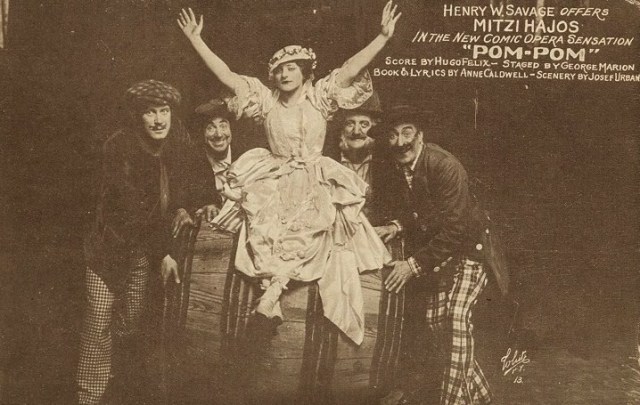




 Our great grandparents, Harry and Mary Anne Deverill, moved out of the Borough to Lambeth around the time that Mary Anne’s sister Jennie and her husband Richard Vanson did the same. Richard and Jennie and their three girls lived just north of Harry and Mary Anne, in a block of artisans’ dwellings on Burdett Street off Westminster Bridge Road. You could follow the road west and travel across the Thames to a different world: the Houses of Parliament and the Clock Tower were there, with Westminster Abbey and Buckingham Palace just beyond. Like Harry and his brother Jack, who’d been in trade together, Richard disappeared from commercial directories around this time, so it seems he’d lost or given up his business as a boot repairer. But his new home in Burdett Chambers was very close to H & M Rayne, shoemakers to the theatrical crowd and, according to The Stage Year Book, “manufacturers and outfitters of every requisite for the stage.”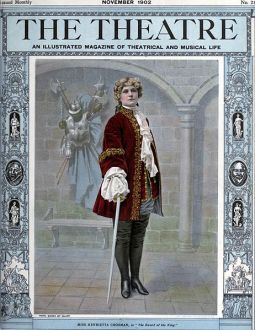

 The Cowkeeper's Wish