Part 1: A WW1 Barnardo’s Boy

Wingham, Ontario, around 1910, courtesy McCord Museum

I’ve mentioned before that I’m currently working on a new book about WW1 soldiers and medical staff returning to Canada after the war. The book is non-fiction, though not family-related this time, however the research chops Tracy and I acquired writing The Cowkeeper’s Wish have come in extremely handy for this new project. Sometimes the stories are so fascinating I go down rabbit holes and disappear for great lengths of time.

So it went when I came across an article about a man named Hugh Russell. I was on a mission to find out more about shell shock — what we would now call PTSD — and how men grappled with it for years after the war was over. In a newspaper archive, I found a 1937 article about a veteran having gone missing from the farm he was working on near Wingham, Ontario. The Windsor Star reported:

Fear that Hugh Russell, 42-year-old farmhand and returned soldier, is lost in a treacherous swamp in what is known here as the Alps, is being entertained here today. Russell was said to have been acting strangely when he disappeared from the home of his employer, Nelson Pickells, Sunday night, and when he did not return to his work yesterday morning, a search of the swamp in the vicinity of the Pickells farm showed he had slept in the swamp overnight. It is feared he may be suffering a recurrence of shell shock. The farm is on the Alps in the Township of Culross, in a district where there is particularly treacherous land with many morasses and bog holes. Russell, a former Barnardo Home boy, and said to have suffered shell shock during the war, came to work for Nelson Pickells last Christmas. He ate his dinner on Sunday night but, it is reported, acted in a strange manner and without any comment left after the meal for the swamp. The Pickells believed he was suffering melancholia, and did not worry until he failed to return. He is about five feet six inches tall, has jet black hair, a swarthy complexion, and is very thin. When he disappeared he was wearing a white helmet, dark overalls, a dark blue shirt and horn-rimmed spectacles.

The article made me curious to know more about Hugh Russell — his childhood as a “Barnardo boy,” his war experience, what treatment he might have had for shell shock, and how he’d reintegrated into society after the war. Of course I also wanted to know if he made it out of the swamp! So I started digging, and was quite amazed by the amount and the variety of material I found, sometimes with the help of strangers with a shared curiosity, sometimes from creative and persistent searching. Each piece fitted into another piece and added context to what was already there. I could write a whole series of posts explaining how these pieces emerged in a non-linear way, and how the genealogical sleuthing unfolded. But Hugh’s story is so touching that I think I’ll just tell it as I know it now, in chronological order.

Though his service record says he was born in March of 1895, Hugh Willis (elsewhere William) Russell was actually born on September 27, 1894, in Belfast, so perhaps he didn’t know his birthday. He was the eldest child of Thomas John Russell, a coppersmith, and Sarah Neeson, a weaver, who’d been married a year earlier. A few years later, they had a daughter, Ethel Baker Russell. The family lived at various addresses in Belfast in the 1890s, but by 1899, they’d moved to Birkenhead, Cheshire, a seaport town that looks across the River Mersey to Liverpool. There, a son named Robert George was born. The baptism record shows that Thomas was still a copper/tinsmith, as does the 1901 census record, which puts the family on Back St. Anne Street.

Encyclopaedia Britannica map, 1900

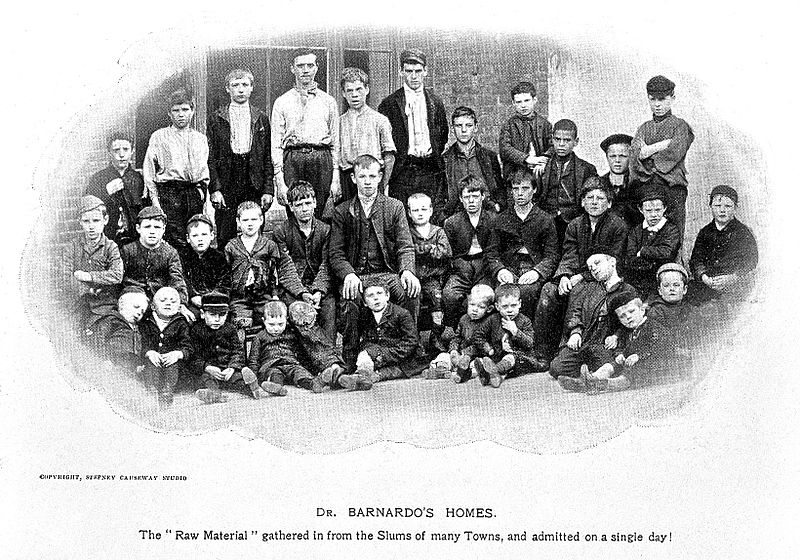
I’m still not certain what happened to Thomas and Sarah (though I have plenty of hunches!), but by 1906, Hugh was on his way to Canada in the care of Barnardo’s. Thomas John Barnardo was the founder and director of homes that took in poor children, beginning in the 1860s. For a glimpse of his philosophy, see his own book, Something Attempted, Something Done!

A group of “miserable street lads,” or what Barnardo called “the raw material,” from Something Attempted, Something Done!

For those unfamiliar with the home child scheme in general, Library and Archives Canada puts it this way:

Between 1869 and the late 1930s, over 100,000 juvenile migrants were sent to Canada from the British Isles during the child emigration movement. Motivated by social and economic forces, churches and philanthropic organizations sent orphaned, abandoned and pauper children to Canada. Many believed that these children would have a better chance for a healthy, moral life in rural Canada, where families welcomed them as a source of cheap farm labour and domestic help.

After arriving by ship, the children were sent to distributing and receiving homes, such as Fairknowe in Brockville, and then sent on to farmers in the area. Although many of the children were poorly treated and abused, others experienced a better life and job opportunities here than if they had remained in the urban slums of England. Many served with the Canadian and British Forces during both World Wars.

In the LAC’s Home Children database, I found Hugh, age 11, arriving on board the Dominion with 240 other children heading to uncertain futures in a foreign land. Many home children had horrible experiences. Even those who weren’t mistreated must have been devastated to leave their families at such a young age. As I mentioned in another post about a home child, many of these young men were among the first to enlist in WW1, in the hopes that they could get back to England to see their families again. (In 1908, Hugh’s sister Ethel arrived and was placed with a family in Orangeville; and in 1912, Robert came too, and went to Bolton. Like their brother, they’d come with the Barnardo’s organization. Why, and whether there were other children, I’m still not sure.)
From the Wellcome Library

Hugh was placed in Wingham, Ontario, with farmer James Wray and his wife, Martha, who had a little boy named Graham. James Wray kept horses, and it seems that Hugh developed a great love for them over the years. In various places, his service record labels him a horse trainer, trader and jockey. When he enlisted with the 18th Battalion in London in February 1915, he was still living with the Wrays. Graham would have been about 12 by then, and would not have remembered a time when Hugh wasn’t part of the household. Hugh’s service record describes him as 5’3″, fair-skinned, with blue eyes and dark brown hair. He had no distinctive marks or tattoos, and described his trade as “farmer.”

By April of 1915 he was on board the SS Grampian, heading back across the ocean, nine years after his arrival with Barnardo’s. He would have heard news, around this time, of the Battle of Ypres, and the Germans’ first use of poison gas to attack the enemy. Soon, gas masks were part of a soldier’s essential equipment, and a horse’s too.

Library and Archives Canada, PA-005001

A little of what Hugh experienced on the Western Front comes through in his letters home to Graham, which were occasionally published in the Wingham Advance. On January 2, 1916, from “Somewhere in Belgium,” he wrote:

Dear Graham … Well, it is still raining and the mud is getting deeper, I would much rather have the snow. It is certainly miserable with your feet wet all the time and we are all the time scraping off mud. But there is a good time coming and so we are trying to be cheerful until it comes. I don’t believe we will have another winter out here, I think there will be something doing in the spring. You see we can’t do much as there is so much mud and water. I am in the machine gun section now so I will likely have a chance to kill lots of Germans.

I suppose you had as merry a Christmas as ever, we were in the trenches that day, there was no firing and everything was quiet. We invited the Germans over to dinner, some of them started out but got scared before they got far and beat it back. We can [call out] to them and hear them answer but we can’t understand them. I think they are Prussians in front of us. They pump the water out of their trenches and it runs down into ours, so we have to keep pumping all the time. We have a bit time with the rats in this country they seem to be here in millions. They are all sizes and colours, sometimes when they jump up on the parapet they startle us for they look like a man coming over. They are very tame and we have to kick them out of the way, they often eat our rations and keep scratching and running about when we are trying to get to sleep and I guess they bother the Germans just the same.

This is a great life. After this I will be able to live back in the bush in a hole in the ground, I’ll hardly feel comfortable in a feather bed. I just get my clothes off every eighteen days that is to get a bath. Still we don’t mind it much and we have many a good laugh, you would think if you heard us sometimes that there was no war on at all. I don’t believe I could stay away from the boys very long now, we are so attached to each other although the old battalion is gradually changing into a different lot of faces. The half of them seem to be strangers to me now.

Well I guess when this is all this time. When you write again send my letter to machine gun section instead of B company. Hoping this year will see us all together again, I remain your old friend.

Hugh

The tone of Hugh’s letters changed as the months went on, and by September 1916, during the Battle of the Somme, Hugh was in no condition to write. But I’ll save that part of the story for next time, exploring Hugh’s war experience in more detail, as well as his love for horses, and his treatment in England for shell shock.

With thanks to the London & Middlesex Branch of Ontario Ancestors’ facebook group, and in particular the tenacity of Cookie Foster. Appreciation also for the Huron County Museum’s wonderful collection of digitized newspapers, and Eric Edwards’ tireless 18th Battalion research. And with special thanks to Wray family descendants.

WW1 in the Junction Triangle

A 1913 sliver of what is now the Junction Triangle neighbourhood in Toronto’s west end. The image comes from Goad’s Fire Insurance Plan. Click here for a larger view.

Last year at this time, I posted about James Morley’s wonderful mapping project, A Street Near You, and how I used the map to find out about men with connections to my own street, Perth Avenue in Toronto, who’d died in the First World War. Remembrance Day has rolled around again, but what a different world we find ourselves in. COVID-19 means that my house is busy during the day, whereas before I had it gloriously to myself to work away on my writing. But it also means that my friends work from home, and I’ve developed a nice routine with one of them, walking most lunchtimes.

My friend and I thought we might extend our walk for Remembrance Day, and visit Prospect Cemetery, but because of COVID, the cemetery has asked that the public stay away, so instead we’ve turned to A Street Near You, and will walk by a few of these addresses to acknowledge the people who once lived there.

A little icon on the map tells me that Stanley Arthur Price lived at 346 Wallace Avenue, between Perth Avenue and the West Toronto Railpath, and died on November 10, 1917. A quick google of his name shows that the map should actually hold two icons at that same address: Stanley’s brother, Jack, was killed in action in May of the same year.

When Jack died, the Toronto Star ran a picture of him, and an article that said, “He was 27 years old, and employed with the Canadian Kodak Co. He enlisted with his brother, Pte. Stanley Price, who went overseas with the same battalion, and is now on the reserve in England after getting trench fever in France. Pte. Jack Price was at one time a conductor on the Toronto Street Railway Co. Besides his father and mother, he leaves a 16-year-old brother, Charles, and an older brother, William, who has been rejected several times as unfit for service in the ranks. The family came from London, England, ten years ago.”

According to Stanley’s record, he too worked for Kodak, and was a tinsmith by trade. He recovered from his bout of trench fever, and returned to fighting shortly after Jack died. By November, he was engaged in the Battle of Passchendaele. His death must have been a horrible blow for the family, having already lost one son — and his service record suggests additional anguish: Stanley was reported “wounded and missing” in November, and the amended status “killed in action” came almost a year later. Many families held out hope that a man labeled “missing” would eventually return.

A Street Near You says that Frank Hamilton Fish lived a few doors west of Stanley and Jack Price, at 358 Wallace, and that he died in France in April 1918, just 19 years old. But once again, a bit of snooping reveals even greater losses. On May 10, 1918, an article headed “Second Son Killed” appeared in the Toronto Evening Telegram:

“Word has reached his mother … that her son, Pte. Frank Fish, 709466, died of wounds April 24, in No. 6 Field Ambulance Depot. He was nineteen years of age and enlisted in St. John three years ago with his two brothers. Sergt. Fred Fish was killed July 23, 1917. The third, Pte. Harry Fish, served twenty-six months and was invalided home.” The article goes on to say that the boys’ father had died a year earlier, and their sister’s husband was wounded the day Frank was killed.

Did the Fish and Price families know each other? What was it like for communities like ours to deal with such horrible losses?

A map icon for John William Smith sits at 31 Macaulay Avenue, a block north of Wallace. Smith was older than the Price and Fish sons — a 42-year-old husband and father, listed as a decorator in his record. At the time of his death, four brothers were serving in the army, as well as a son. He had a baby daughter who he’d never met, and a bit of genealogical sleuthing turns up a photograph of her that was apparently in the pocket of his uniform when he was killed in action in November 1917.

James Edward Webster was a “press operator in can factory” when he enlisted in 1916. He was married and had two little boys at that time. The family was living on King Street and only later moved to 71 Edwin Avenue. He first fell sick at Vimy Ridge, where doctors decided he had pneumonia caused by exposure to cold and dampness. “Took cold in the head in December 1916,” his record reports, “with slight hacking cough and pain in the chest. Stayed in the trenches two weeks before reporting sick.” Later it became clear he had pulmonary tuberculosis, and he was invalided home. A 1918 letter from the Mountain Sanatorium in Hamilton is included in his file, and after almost nine months of treatment there tells us that, “His condition has assumed a chronic, stationary type, with temperature normal, moist sounds and sputum cleared up, probably as much as they will ever be. He will get along as well at home, living carefully, as in a Sanatorium. … His lung tissue is so much impaired that he will always be totally disabled from earning a living in the general labour market.” He died in Aurora in January 1920.

A little north and east of the Edwin address is a short street called Hugo Avenue. When my daughter was little, it always seemed that Hugo had extra spirit, and was splendidly decorated at Christmas and Halloween. What it was like 100 years ago, I don’t know, but the map suggests George Gladman had some connection to 2 Hugo, and that he died in France in September 1918. His record says that when he enlisted in 1916, he was a 29-year-old munition worker with young children and a wife named Kate. Like John William Smith, at the time of his death he had a child he’d never seen. When George died, Kate was on her own with four young children. But by 1921, the census shows her at Hugo, remarried and with a fifth child. The words “deaf mute” are scrawled beside her name. Kate’s new husband Ernest Buxton also served in the war. He suffered severe burns from mustard gas in 1917. When he died in the 1940s, the family was still living on Hugo.

These are just a few WW1 stories from addresses between my house and my friend’s, and a tiny selection of the families who lived in our community a century ago.

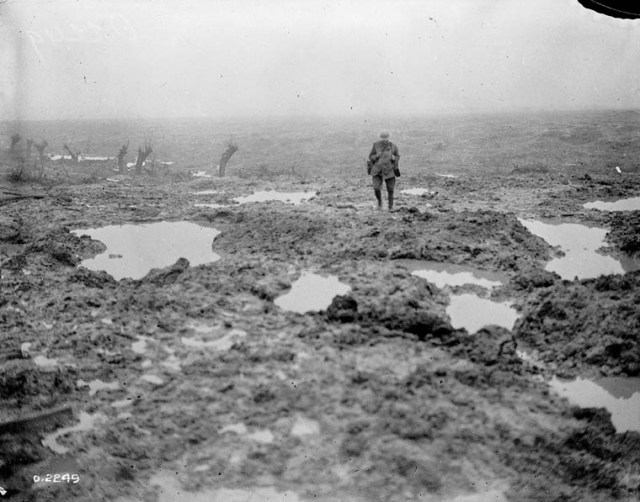
A lone Canadian soldier navigates the mud-soaked battlefield at Passchendaele, Belgium, in November 1917. William Rider-Rider / Department of National Defence / Library and Archives Canada / PA-002165

Flu Pandemic 1918: Cars, chauffeurs & transit

Part 10

Early in the pandemic, my husband and I bought a car. We live in Toronto, close to all forms of transit, and have never felt the need to have one. For reasons unrelated to COVID-19, we finally purchased. We wanted to get out to the country more often and explore the possibility of living there, and our daughter has reached driving age, so it all seemed to make good sense.

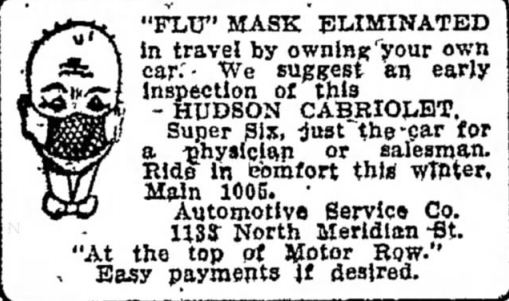
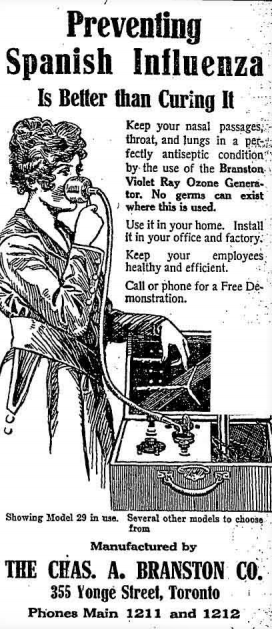
The man we purchased from told us business had been booming. He said people were buying simply because they didn’t want to take transit anymore. We were stunned. It seems the trend has continued to grow. Months later, my husband was recently at the dealership again and there were no cars on view. He asked the fellow there why that was, and he answered that they couldn’t keep them in stock. So when I stumbled on this little ad from a 1918 newspaper, it struck me as yet another parallel between COVID-19 and the Spanish flu.

Indianapolis Star, 24 November 1918

One thing always leads to another when snooping around in a newspaper archive. This article from around the same time reports on “Washington Society Women Working Day and Night as Emergency Chauffeurs.”

Washington Times, Oct 28, 1918

If the worst comes to the worst and they need a job in a hurry, more than a hundred of Washington’s most prominent women can qualify as first-class chauffeurs.

Volunteering their cars and their own services as drivers at the beginning of the Spanish influenza epidemic, they have been on duty both night and day driving doctors and nurses to the homes of influenza sufferers, carrying hot food from relief stations and performing all sorts of errands to speed up the work of all the various organizations engaged in fighting influenza.

So far their batting average is somewhere around 1,000. They have demonstrated that they are afraid of nothing, from influenza germs to flat tires, and after more than two weeks of “chauffing” experience, they can drive to any city address … without ever deigning to consult a city street directory.

These women … report each day at the Webster School, Tenth and H streets northwest. Some work all day, some several hours, others work in emergency.

At the school they wait for a job in much the same fashion as a taxi driver reports to his headquarters. One assignment may be to rush a doctor to a dying patient, another to take a nurse to a “case.”

Some drivers are exclusively for taking food to patients. They report to the school fill up their car with thermos bottles containing bouillon, milk or liquid nourishment, and proceed to distribute the bottles to a list of addresses with which they are furnished. This work necessitates going into the homes of influenza sufferers. Many war workers living in boarding and rooming houses with no one to care for them, not sufficiently ill to be removed to a hospital, are fed three times a day in this manner. …

Demonstration at the Red Cross Emergency Ambulance Station in Washington, D.C., during the influenza pandemic of 1918. Library of Congress

And finally here’s another transit-related find from Toronto around the same time:

Toronto Star, 21 Feb, 1920

(By the way, we still take transit! We wear our masks and use our sanitizer and keep our distance.)

Flu Pandemic 1918: Fashion, Masks & Flu Veils

Part Nine

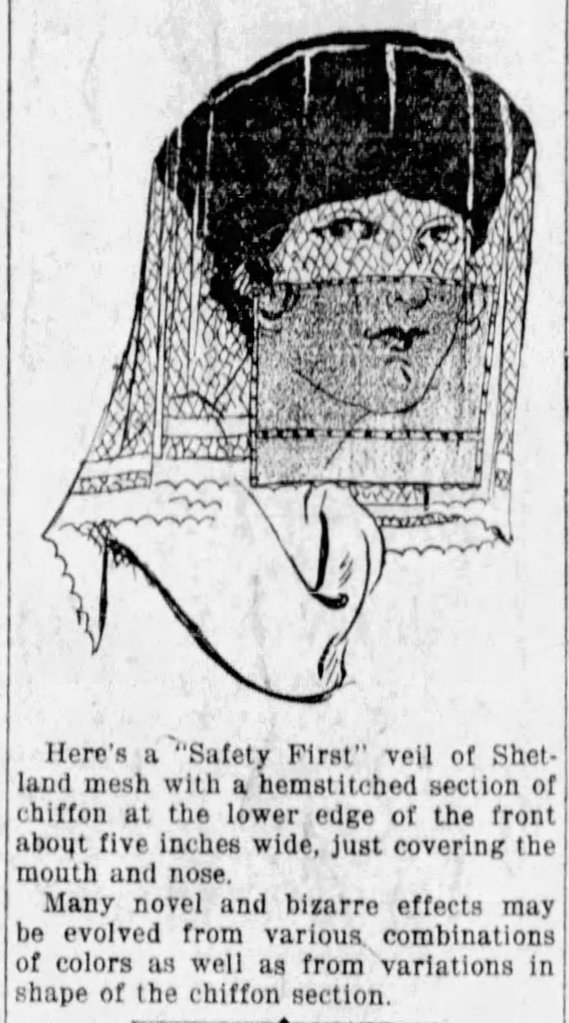
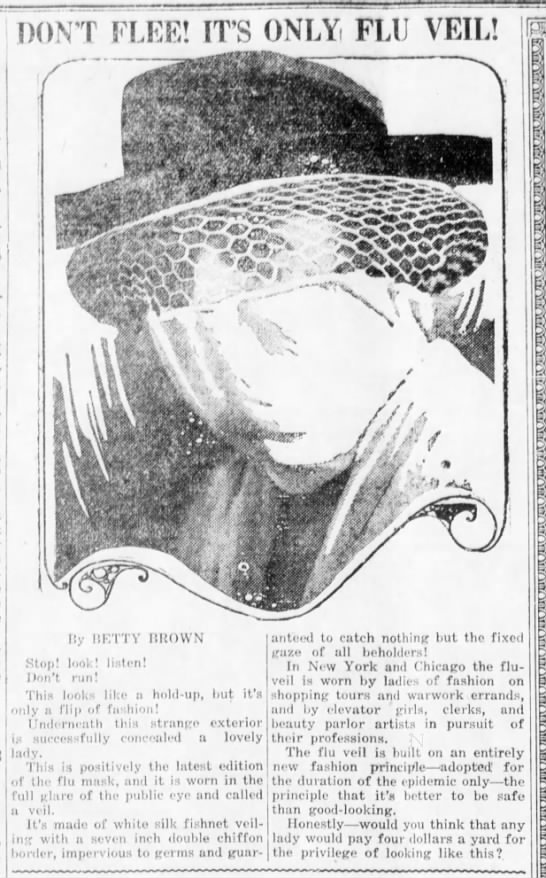
It’s been too long since we’ve posted, so here’s a tiny update in keeping with our current thread on COVID-19 and the Spanish Flu. These ads and articles come from 1918 newspapers that show a trend of wearing “flu veils” and masks to stave off influenza. It’s interesting to see the different takes on beauty! One piece notes, “It’s better to be safe than good-looking,” and another finds the flu veils “bewitching” and “delightful.”

Judging from the following poem, which appeared in the Ogden Standard in December 1918, it would seem the anti-mask movement rankled in much the same way it does today:

“If you think you have the Flu—wear a mask; though some fuss it puts you to—wear a mask; YOU may not believe it’s right—cuss about it day and night—keep your faith and conscience bright—wear a mask! If you think that you’re quite well—wear a mask; wiser heads than yours can’t tell—wear a mask; snare that ‘bug’ before he bites, interrupt his fatal flights, thus you’re spared some awful nights—wear a mask! If you think you know it all—wear a mask; if you think your thinks are small—wear a mask; You would fight for Uncle Sam? Then for him give Flu a lam. If you’re worth a tinker’s damn—wear a mask! Though you swear and sweat and rave—wear a mask; some dear neighbor you may save by that task; doctors say—and they should know—that masks will make this fluzzy go, then do your part or shame will show through your mask! This ONE lesson you should learn—WEAR A MASK; though your mouth and nostrils burn—wear a mask; it’s a shame when you or I let this SIMPLE thing go by, then weep and wail when loved ones die—wear a mask!” –Mace Walton


Sources:

Kansas City Star, Los Angeles Record, Leader-Post, Daily Province, Ogden Standard

Flu Pandemic 1918: “It has swept over the earth like a cyclone…”

Part 8

A little dip back in time to see how the influenza pandemic was being characterized in the papers over a century ago. The article comes from the Sheffield Daily Telegraph, October 19, 1918, and the photograph from The Sketch a year later.

From The Sketch, Oct. 29, 1919: “This photograph of Miss Isobel Elsom is her latest portrait. Her admirers, however, need not feel any anxiety as to the wisdom of her taking the sea-breezes in summer-kit just as the influenza weather is starting as Miss Elsom wasn’t really posed on the white cliffs of England, but in a studio! The photograph is an excellent example of the effects which can be obtained by the new Elwin Neame method of indoor photography, by which you can be taken ‘anywhere you like’ and yet in the studio.”

THE INFLUENZA SCOURGE. We are told that the best way to guard against influenza is not to worry about it. It is sensible advice, although probably it will have little effect, for the people who are given to worrying over what may happen to them will go on worrying. The people who will follow the advice will be those who would have done so in any case. It would be idle, of course, to try and soothe popular fears by minimising the severity of the epidemic. The whole world is in its grip, and not only is it widespread, but its form is often most virulent. In Sheffield last week, for instance, the number of deaths from influenza and pneumonia reached 300, and all over the country the mortality has been high. There is thus far no sign of any abatement of the scourge, and there are no measures known to medical science that can prevent its running its course. The only useful precautions are those that the individual can practise himself—living as healthily as possible both in mind and body, taking plenty of fresh air, food, and sleep, and keeping out of crowds. If, despite this, he gets it, let him go to bed at once; it is not a complaint that tolerates obstinate heroics. This world outbreak has completely mystified the medical profession. There have been similar pandemics but a writer in The Times is of the opinion that there has been none of these proportions since the Middle Ages. It has swept over the earth like a cyclone, and the causes of its spread are unknown. It is not to be ascribed to the war, although it is possible that its effect has been more pronounced on account of conditions that the war has produced. We do not know that there is even sound evidence of that, for in this country the national health was never so good, and although the sanitary conditions are worse through shortage of labour, that can scarcely apply to the United States where the epidemic is as bad as here. Perhaps the mental state of the people, which has been abnormal for over four years, may have lessened the resistive power, and provided a favourable reproductive nest for the disease germs. But the phenomena of the disease remain baffling, and call for profound and lengthy scientific study that has not hitherto been given to them. We have passed beyond the time when any intelligent mind would see in this world affliction a visitation from God for fighting a war in defence of our liberties. Pandemics are mysteries only because they have never been thoroughly investigated. We may be sure there are definite physical causes for them, and that it is not beyond the brain of man to trace them. The last thing we must do is to give way to superstitious fears.

Source: The British Newspaper Archive

Flu Pandemic 1918: dainty tablets & unseen heroes

Part 6

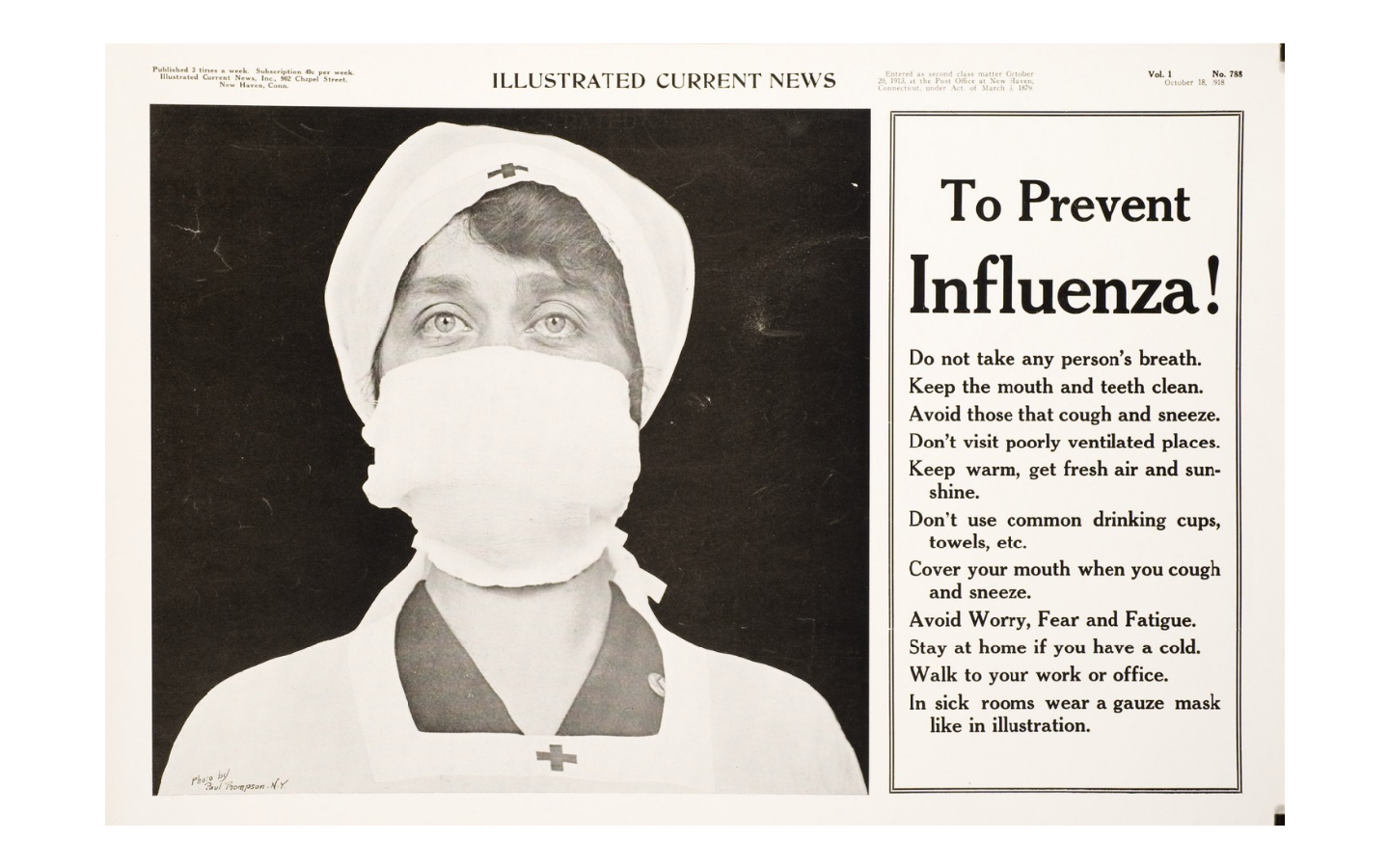
prevent flu
Illustrated Current News, 1918. Courtesy National Library of Medicine, US.

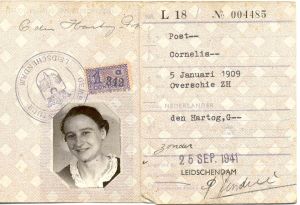
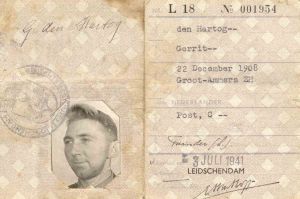
As the fight against COVID-19 carries on, I continue to see links with the Spanish flu pandemic, and increasingly with wartime itself. Some of you will know that while The Cowkeeper’s Wish tells the story of our maternal side, including the WW1 period, our first book together, The Occupied Garden, tells the story of our father’s family in The Netherlands in WW2.

Recently my aunt wrote to our family group that she and a cousin had shared the feelings they were re-experiencing from war. They were little children then, but wise enough to sense the fear and the tension that came from not knowing what would happen next. “Several times [lately] I have thought of our parents,” she wrote to my dad and her other siblings. “Mom in 1940 with three little ones and pregnant with a fourth. And now I understand more than ever Dad not willing to give up his radio [though forbidden by the occupiers], each day hoping to gain some knowledge about their near future.”

Cor and Gerrit den Hartog’s identity cards from WW2.

For people living under occupation, radios were a lifeline to the world outside, and to hopeful news about defeating the enemy. Can you imagine the times we are living through now, and how we would feel if we didn’t have radio or the internet or news of our progress in battling the virus? Much of the news is bleak, of course, and worse yet, false, so we need to be as careful consuming it as we are about washing our hands.

Last week Health Canada issued a warning about “drugs, natural health products, homeopathic products and medical devices … that make false or misleading claims to prevent, treat or cure COVID-19.” Dubious advice includes everything from drinking cow urine or bleach to consuming Chaga mushrooms and Vitamin C. The World Health Organization’s myth-busters page tells us “No. Spraying alcohol or chlorine all over your body will not kill viruses that have already entered your body.” And also states that “Garlic is a healthy food that may have some antimicrobial properties. However, there is no evidence from the current outbreak that eating garlic has protected people from the new coronavirus.” And while a bubble bath is a lovely way to relax and calm your nerves in troubled times — and also to get clean! — “Taking a hot bath will not prevent you from catching COVID-19.”

Revisiting 1918 via the newspaper archives, I see that plenty of ads turn up promising influenza cures. There was Dr. Chase’s Menthol Bag, which you pinned to the chest of your underclothes. “The heat from the body causes the menthol fumes to rise and mingle with the air you breathe, thereby killing the germs and protecting you against Spanish influenza and all infectious diseases.” Dr. Chase also offered “Nerve Food” to strengthen the heart, as well as Syrup of Linseed and Turpentine for the throat and bronchial tubes.

And there were Evans’ Pastilles, “made from a private formula … and free from poisonous alkaloids.” The ads warned that the flu thrived in heated, crowded theatres, but “the ill-effects of the germ attacks can be neutralised if one or two Evans’ Pastilles are allowed to dissolve in the mouth when the danger threatens.” Likewise there were “dainty white tablets” called Formamints, so harmless that “children and infants can take them freely,” and yet so powerful that they “destroy the most harmful bacteria that can menace life.”

Screen Shot 2020-04-05 at 3.33.04 PM
“Sucking Formamint tablets, you hardly realize that you are disinfecting your mouth and throat with one of the most powerful germicides known to Science. All you are aware of is a faintly acidulated sweetness, cleaning and moistening the membranes, allaying thirst, refreshing the vocal organs, and purifying the breath without scenting it.”

A writer in the Whitby Gazette reported hearing from a distinguished London doctor that “a raw onion in a fever-stricken room soon decays, because it attracts the germs.” Another writer boasted in the Hamilton Advertiser that he ate a steady diet of onions, and “did not get the ‘flue’ in the recent epidemic; but,” he admitted, “there are others who

Screen Shot 2020-04-05 at 3.43.28 PM
The Globe, October 1918

neither had onions nor the Spanish influenza.” A reader wrote in to the Coventry Telegraph, advising everyone to “eat two small onions, uncooked, every night, as a fine preventive. The efficacy of an onion is too well-known to need much persuasion.”

Interviewed years after her WW1 service, the Canadian nurse Mabel Lucas recalled her younger sister falling ill with influenza. Mabel was still overseas, and relieved that one of her old classmates had offered to care for the girl. “When she found out that they said there was no hope for her, she said ‘Can I do what I want to do?’ The doctor said, ‘Anything that you think will help.’ She made onion poultices and put them on [my sister’s] back and chest and even on the bottom of her feet. She kept them on for days. When I came home and would give her a bath, I could still smell onions. It was right in the pores. … She lived for years afterwards.'”

So, she survived the wars — both the First World War and the war against influenza.

In our family email group, perhaps inspired by my aunt’s reawakened memories of wartime Holland, my cousin made an interesting analogy regarding “Us Against COVID-19.” There are the people she calls “unseen heroes” — ordinary people who shop for friends and strangers in quarantine, or make food for others working long and extra stressful hours, or come up with ingenious ways to battle the enemy. And there are the collaborators, the people who refuse to stay in self-isolation or quarantine, who lie about where they’ve been or what their symptoms are, or who buy up large amounts of supplies: toilet paper, wipes, hand sanitizer, masks and gloves, with a plan to resell them online for a profit.

Then of course there are the resistance fighters: the healthcare workers and the truck drivers and the grocery store employees and the cleaners; the firefighters and the police and the postal workers; the gas station employees and the farmers and the staff at longterm care homes. The list goes on and on for the people who are on the front lines in varying ways, potentially exposing themselves to the virus every day, but providing essential services for the rest of us.

Sources:

British Newspaper Archive

National Library of Medicine

Globe & Mail Historical Newspaper Archive, Toronto Public Library

Margaret Allemang interviews, Canadian War Museum

Flu Pandemic 1918: “I love to get your letters so much…”

Part 4

birds in the war zone, bird lore magazine 1917
From an article about birds in the war zone, Bird Lore Magazine, 1917

I’m sure everyone has stepped up contact with family members in the last while. We’ve been hearing from my husband’s relatives in the UK and in other parts of Ontario, and from my family too, here in Canada and in the Netherlands. Several of the notes that have come have mentioned nature, and how birds are singing and geese are honking, oblivious to the turmoil. A good friend who lives in Manchester tells me she has been working in her garden, and it made me realize how anxious I am for spring, because digging in the earth and helping things grow is such a soothing pastime. (And this morning I read a beautiful essay reminding me that even when the television is “full of terror … the trees are full of music.”)

My father and his wife are in Guatemala right now, on their sailboat. They live aboard, traveling the world, and made it into the country just before its borders closed. “Today was the first day of the curfew starting at 4 p.m.,” my dad wrote yesterday to our wider family group, “and although a busy high bridge towers over the Rio Dulce not far away and we are surrounded by marinas, not a thing is moving on land or on the water except the odd toucan, a pair of parakeets and assorted other birds. It is eerily quiet.”

Dad suggested a group of us — aunts and uncles, cousins, siblings — check in with each other every couple of days, since we are a far-flung lot. My mom and her husband are in Portugal, due home Friday, and we have all been eagerly anticipating their safe return. This morning she wrote to the group, “We are anxious to get back home to all the snow, which is the reason we leave in the winter!! Everything is in lockdown here and has been for about a week. First of all the schools and universities all closed, then the store, bars, restaurants. Some outdoor patios stayed open for a few days as long as people sat far apart, but now everything is closed. They are being very strict about it. Grocery stores are open but fewer people are there. There are big signs everywhere warning people to keep a distance and to look at the products and choose only what you want, and buy only what you need. Do not handle things. There are no attendants at the deli counter, only packaged things to choose from. There are big plexiglass screens shielding the cashiers and only cards are accepted, no cash. There are red signs on the floor for cash lineups showing how far apart you must be. Pharmacies will only let one or two people in at a time. When one person goes out, one can go in. In the lineup outside people are 2 metres apart. The post office is like that too. There are only 6 apartments occupied in our hotel now and when we go out to get groceries we have to ring to be let in. We cannot stay in the room when the maid comes. She is wearing a mask and we have go out until she is finished.”

Even though I’m in my 50s now, I’m used to my parents worrying about me. It’s weird to have the tables turned. But the emails help. And in our day and age we’re lucky enough to have facetime too. My teenage daughter can still hang out with her friends this way. All of this brings to mind how essential letters must have been a century ago for people separated by war, though the missives had to float slowly back and forth across the ocean, and sometimes all kinds of things had changed by the time the letters got read. When the influenza pandemic began in 1918, new worries piled on to the worries that had already existed for years. Snooping through the wonderful Canadian Letters & Images Project, I found a treasure trove of photos and letters connected to a soldier named Cecil Moody, who enlisted in 1915 and served with a Field Ambulance unit until the end of the war. He had a wife he called Budsie back home in Canada, and a little boy nicknamed Bobs. The collection contains almost 40 letters, but the one below is especially touching, and gives a glimpse into how the flu pandemic impacted medical workers’ already challenging duties.

Les Fermont, South of Arras, June 29, 1918

Budsie Dear:

Moody.photo.nd.16.
Budsie & Bobs, courtesy Canadian Letters & Images Project

Although you let a week slip by without writing, I can fully forgive you for the dandy snaps you sent. I was ever so pleased with them girlie. Isn’t wee Bobs getting to be a big boy. Lord! He will be as big as his Dad if I don’t soon get home. And you are looking to sweet for words Dearie. The boys that I have showed the picture to all say what a peach of a looking girl you are. And really Hon. I am so wonderfully proud of you when anybody pays you a compliment; it always makes me feel as though it had been paid to myself.

You’re some little tailoress too Budsie. Bob’s clothes look awfully cute. You must feel jolly proud of yourself, turning the wee chap out so smartly.

Well, you will notice that I too have missed a week in writing, but my excuse is good, and an honest one. Our ambulance base covered more miles in the last two weeks than they have since we have been in France. We have had three or four moves in the last two weeks, but apart from that, we have been running day and night, hauling Spanish Flu patients. I guess you have read in the papers about the influenza plague. Well, we are certainly getting our share of it in France now. Harry has been in the Hospital for the last two or three days, but he is OK again. Now, it’s nothing really serious, but by gosh, a man is almighty sick for a couple of days. I think Fritz’s army is also suffering from the plague from the reports of the prisoners taken lately. In fact, it is rumoured that that was the reason their offensive was given up. …

Moody.photo.Sept.1916.
An advance dressing station in France, 1916, courtesy Canadian Letters & Images Project.

Well Hon, we are back in the line again after the longest rest our division has had since we have been in France. We all have to break ourselves in again, but we are on a very quiet front, so unless something starts up, we shall have a very “cushy” time. In the last 13 days, our old bus has travelled just over 1300 miles! Most of the rips have been short ones, but numerous. … We have been sleeping in our cars for a long time, but we don’t like to take chances now that we are hauling so many flu patients. I think that is how Harry caught it.

Moody.photo.July.1918.
A watercolour by one of Cecil’s fellow soldiers in France. Courtesy Canadian Letters & Images Project.

… No, I’m afraid there is slim chance of my ever getting back to you Darling, until this damn war finishes up. How I would love to be with you again. But I couldn’t bear to come home for for a couple of months and then have to leave you again. I would much rather wait until I can have you again for “Keeps”.

Poor old Harry. If there’s ever any sickness going around, it always seems to attach itself to him. His chances of returning to Canada seem pretty slim now. He has not heard anymore.

Buds, why don’t you write a little letter to me from Bobs. You have never even mentioned whether he has received any of the little notes I have enclosed in your letters. You can ask him what he wants to say and write it for him. Don’t suggest anything – just see what he would say on his own accord. Where did he get the wee tricycle? Can he ride it alright? …

Well old sweetheart, I must say Au Revoir. If you miss one week in writing Dear, make the next letter twice as long. I love to get your letters so much. Have you noticed any of my letters missing? I still number them. All my love to you precious girl, and a big kiss. Love too to Bobs.

Ever your own

Cis

_Moody.photo.nd.4.front.
Cecil Moody, courtesy Canadian Letters & Images Project


Flu Pandemic 1918: “trying times test us”

Part 3

rosamond curtis
Courtesy Imperial War Museum,© IWM (WWC H2-125)

Lately in the news there have been stories about hospital ships being brought into action to help ease the burden on regular hospitals; about distilleries making hand sanitizer especially for police and healthcare workers; and about automotive companies producing ventilators instead of car parts. There’s even been speculation that a certain high-end parka manufacturer might begin churning out hospital gowns.

Each time I hear these stories, as well as today’s announcement that the Canadian government will help businesses “re-tool” to produce the supplies we need, I am reminded of my WW1 research, both for The Cowkeeper’s Wish with Tracy, and for my new book, still in the early stages, about patients and staff at a military hospital here in Toronto in the First World War.

In those days, all sorts of factories had transformed to produce munitions, but there were countless other changes too. Fancy shoemakers made army boots, milliners made military caps, and tailors made uniforms instead of ordinary suits and overcoats. Passenger ships became troop carriers or floating hospitals. Car manufacturers made military vehicles, and rubber tire producers made gas masks and balloons for reconnaissance. Even cardboard box manufacturers were affected by war: boxes of all sizes were now needed for care parcels for soldiers and sailors, for the boots and shoes and hats that made up their uniforms, for the medals that got pinned to them and for the ammunition they used. Cardboard discs hung in windows, proudly announcing that the man who lived there was off fighting for king and country.

munitions iwm
British munition workers filling shells in a factory at an undisclosed location. Courtesy Imperial War Museum. © IWM (Q 110261)

Though the Spanish flu pandemic that surged in this period differed from the current outbreak, I feel somewhat comforted to dip back in time and explore how an earlier generation coped with worry and fear, and what sorts of decisions were made to try to slow the spread. Their pandemic rushed in at the end of a horrific war, and ours comes in the midst of environmental despair. Many people seem to be feeling a weird clash of emotions. On one hand, we’re only just recognizing an obvious but beautiful fact as the virus drifts across borders: we really are all in the same boat. Italy seems close when you can sit at your computer in Canada and hear people singing from their balconies, in isolation together. At the same time we’re dismayed by what we’ve collectively done to the planet that holds us. A sense of despair was also there a century ago, as the war was ending: people likened influenza to a deadly wind blowing about the earth as a kind of punishment.

According to Howard Phillips, the author of Black October, “many people were convinced that [the flu pandemic] must somehow have been connected with the war. Thus, in Entente countries, tags coined included ‘war plague,’ ‘Flanders grippe,’ ‘Hun flu,’ ‘Turco-Germanic bacterial criminal enterprise’ and ‘German plague,’ as many believed that the war-epidemic link lay in the unburied corpses on the battlefields or the dastardly use of poison gas. ‘So many were killed in the great war of the white people’, explained indigenous healers in faraway Southern Rhodesia, ‘that the blood of the dead caused this great sickness,’ while in the memory of one elderly flu survivor sixty years later, the war ‘poisoned the air … all the bombs and things … travelled with the wind [around the world].’

Spanish_flu_death_chart
A chart of deaths in major cities, showing a peak in October and November 1918. The image brings to mind the current effort to “flatten the curve.”

There were three waves of the pandemic then, just as there are expected to be subsequent waves of Covid 19. In January 1920, two years after the original outbreak, the death of a young Toronto boy prompted the Star headline “Is flu back again?” Over the course of the month, both the Star and the Globe reported on large outbreaks south of the border with such increasing alarm that it soon seemed inevitable the epidemic would return, swirling over the city like frenzied snowflakes, and falling wherever it chose. In Chicago, California-bound trains were “crowded to the limit” with people fleeing to escape flu. And in Detroit, the coroner announced the county morgue was “filled to its capacity with bodies. … If bodies continue coming in as they have in the last two days extra arrangements for their care will have to be made.” Ads appeared in Toronto papers for cure-alls like Hamlin’s Wizard Oil: snuff it up the nose at the first sign of a cough or sore throat and you could stop the symptoms from turning into “dangerous influenza.” By the end of January, there were “more than 500 cases of flu at the border,” as one headline put it, characterizing the illness as a band of murderers poised to invade.

In all likelihood we are in for a long and difficult ride that will impact all of our lives in a variety of ways. Hopefully we manage to lean on each other, without touching, of course. A friend of mine — the writer Phil Dwyer — recently posted some wise words.

“Trying times test us. In our responses, we show who we really are.”

Flu Pandemic 1918: “everyone was being very careful”

Part 2

bridges.jeannette.personal.pp13-14.xxxx_.xx_.xx_.01.01
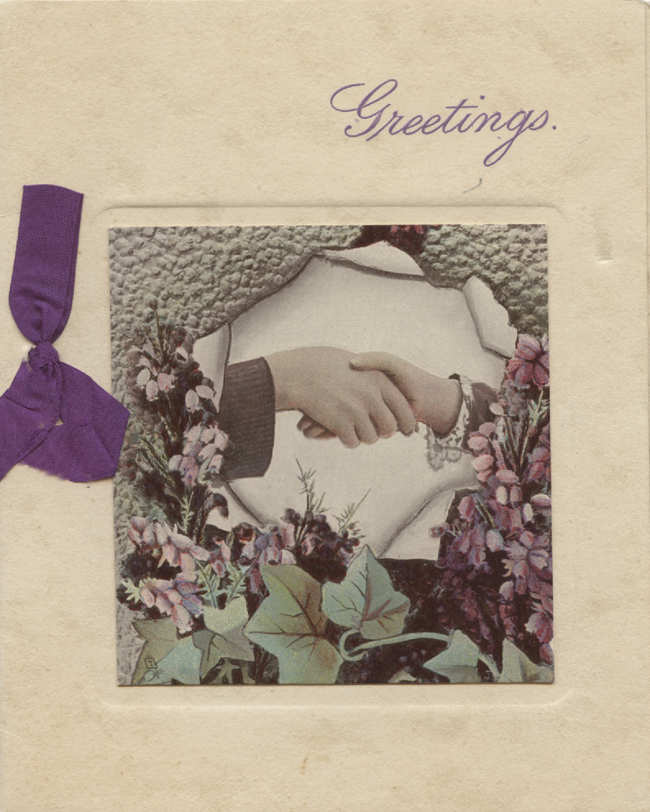
This pretty card is among Nettie’s pictures and letters at CLIP. Strange how an image of grasped hands reads differently right now.

One of my favourite resources for first-person material from the First World War is The Canadian Letters & Images Project, which features scanned images of letters, diaries, photographs and ephemera, and defines itself as “an online archive of the Canadian war experience.” It was an obvious place to look to further our series of posts on the influenza pandemic that happened more than a century ago. Featured below, with thanks to CLIP, is a letter from Jeanette “Nettie” Bridges to her mother back home in New Brunswick. Nettie was a VAD stationed at a hospital in Reading, Berkshire, when she contracted influenza in October 1918. She had only recently married a Canadian soldier.

The story has a happy ending: Nettie and her husband survived both the pandemic and the war, and returned home to raise a family in Canada. But reading Nettie’s words reminds me how grateful we must be to the healthcare workers looking after our most vulnerable just now, all across the globe. A dear old friend of mine works in public health in Ottawa; my niece is working in a hospital as part of her nursing studies; and another good friend and neighbour works in the emergency room of a busy Toronto hospital. This post goes out to them and their ilk as a small way of saying thank you.

bridges.jeannette.photo_.pp5-6.xxxx_.xx_.xx_.02.front_
Nettie, front row, right, with colleagues. Courtesy Canadian Letters & Images Project.

Dearest Mother:-

Now wasn’t it just like me to be one of the influenza victims, but when I tell you that one third of the staff on night duty & a great many on day duty are down with it you would probably have been more surprised if I had escaped.

I never felt better in my life than I did last Thursday just a week to-morrow. We went for a long ride on the top of a tram that morning before we went to bed and the air was beautiful. I was so well wrapped up too. had a sweater under my great coat & the latter has a nice big opossum collar on it now. Went on duty that night feeling fine Friday morning about 5 o’clock my throat began to feel raw, but I didn’t think much of it. At 7:30 just when we come off duty I felt a bit shivery so took a dose of quinine as we had been told to do if we felt that way as a precaution (two of our staff at least of no.3 where Mary is had died of influenza and pneumonia a week before and everyone was being very careful).

jeanette bridges
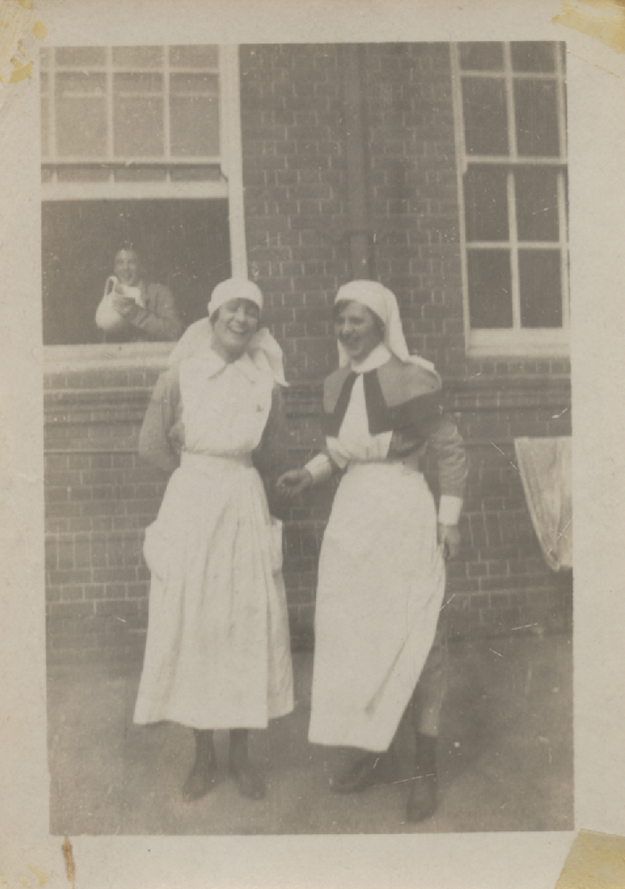
Nettie, left, in her VAD uniform, laughing with a nursing sister. Courtesy Canadian Letters & Images Project.

After breakfast I told Mary I thought I would go right to bed as I didn’t feel extra well, I kept getting hotter and hotter and by 10.30 my temperature was 101 so by 1.30 I was in a bed down here (they send one of the hospital ambulances for me).

The Sisters Sick Quarters or Sick Hut is down at No.1 and consists of 2 little hut wards of 5 beds each very cosy with a nice bright fire burning in the grate day and night. Pretty chinez sheets and little rose puffs on the bed, so it is very comfortable would be very lonely to be in a ward alone as no one is allowed in to see us but as the other beds are occuppied by 2 V.A.D’s & 2 Sisters we keep each other company.

Mary and Marion send me flowers & grapes or something each morning and bring my letters down to me but I’m not allowed to see them, so far they have both escaped. …

I was glad everyone was pleased with the wedding especially Mr & Mrs Mackay & you and father. you are really the only ones that count.

We are very well looked after here – a day nurse and a night nurse both from the London hospital Whitechapel where Stanley was. They had to send to London for help as none of our staff could be spared to nurse us. The medical officer (same one that looks after the offices) comes in to see us morning and evening and we have every attention. The pain in my head legs and back was something desperate and you have a cough. On Sunday I developed bronchitis which was quite natural knowing me tendency in that direction. I have an inhaler every four hours of eucalyptis and benzoine am really all better now and if I was home would be up, but in the army you have to do as you re told. Have been on chicken diet and actually get it for my lunch each day. I will probably be allowed to sit up by the fire tomorrow afternoon.

The Influenza epidemic has been dreadful all over England. So many of the officers in our hospital here have had it and lots of the Tommies down where I was that’s when I caught it, as I was looking after dozens who had it.

By the time you get this I will be up and as fit as ever so don’t worry about me. The rest in bed is great.

I don’t think I will get many wedding presents till I get home. The chest of silver will be perfect but I think will wait till I get back.

Tea has come in so I must stop. We have lovely thin bread and butter and jam and tea at 4.30. …

A great deal of love to you and father and I do hope you have a good maid by now.

Nettie

bridges.jeannette.photo_.pp17-18.xxxx_.xx_.xx_.08
Nettie, front row, with colleagues and patients in their “hospital blues.” Courtesy Canadian Letters & Images Project.

Flu Pandemic 1918: country air and bicycle cures

Part 1

flu masks lac
Men wearing masks during the Spanish flu epidemic. Alberta, Canada, 1918. Courtesy Library and Archives Canada.

Given the bizarre situation the world finds itself in of late, Tracy and I thought it might be interesting to do a series of posts about the influenza pandemic that swept through the world a century or so ago, right at the end of the First World War. We’ll search out old photographs, diary entries and letters, as well as newspaper accounts and advertisements, to see how people responded to the outbreak in a time vastly different than our own. Since the middle part of The Cowkeeper’s Wish delves deeply into the First World War period, the flu came up time and again in our research. So to start off our series of posts, here’s an excerpt from the story. It begins in 1918, when our great uncle Ernie, then 13, was sent from London to stay with family on a farm in Laindon.

Small Ernie was a fish out of water in Laindon, a green place dotted with farms and hedgerows, and where the fields were covered in pale pink cuckoo flowers and dancing dog-daisies. Instead of the familiar city noises of traffic and too many people, there were the barnyard grunts and snuffles of livestock, and the solitary sound of your own footsteps on gravel paths. At night, there was absolute quiet except for the chirp of crickets in the long grass outside the house, or the thrum of rain on the roof’s wooden shingles. Ernie slept in an unheated room in the attic where silverfish clung to the damp rafters, and although he shared the chores with cousin Percy, … to Ernie fell the worst jobs, like mucking out the pigpen. In the eyes of a 13-year-old as fastidious as Ernie, farm life surely seemed a lot like a punishment.

Ernie wasn’t the only Londoner discovering the charms of rural life. With three million men away fighting, and women filling the jobs they’d previously held, it seemed only sensible to the men at the Board of Agriculture that women could also be encouraged to undertake agricultural work. Those farmers still on the land, though, were reluctant to accept female workers, expecting that they would not be capable of performing the physically demanding work, while women themselves, particularly rural women, saw farm labour as a step below even domestic service. Recruiters decided to target the urban middle class, and organizations such as the Women’s Defense Relief Corps had some early success, advertising the work as a holiday for women to try their hand at haymaking, fruit picking, and harvesting, while the Women’s Farm and Garden Union offered free training on gardening and farming techniques.

land army
Courtesy Imperial War Museum, © IWM (Art.IWM PST 5489)

By 1916, with food shortages an increasing problem, it became apparent that a more concerted effort would have to be put into recruiting female labour. Under the auspices of the newly created Department for Food Production, the Women’s Land Army was formed, and advertisements began to appear nudging women to their agricultural duty. “God Speed the Plough and the Woman Who Drives It,” read the caption below one poster. It depicted a woman guiding a horse-drawn plough against a golden sunrise, as if the call were not just patriotic but divine. At a rally in London, crowds turned out to watch the spectacle of a parade of tractors driven by ladies. At another, women carried rakes, hoes and other farm implements, and banners fluttered, declaring “We Are All Fit,” and “The Lasses are Massing for the Spring Offensive.” The women who volunteered for the Land Army were outfitted by the Department with high boots, a knee-length tunic, a felt hat with a round brim to keep the sun off of fair skin, and breeches. The Land Army Handbook, issued to all members, felt it prudent to make this cautionary statement: “You are doing a man’s work and so you’re dressed rather like a man, but remember just because you wear a smock and breeches you should take care to behave like a British girl who expects chivalry and respect from everyone she meets.” Although the papers claimed they looked “particularly well” in their mannish garb, not everyone was so admiring. In one village, locals threw stones at the arriving Land Army recruits, because they disapproved of women wearing pants.

Laindon, too, had its Land Army girls. One girl assigned to milk and care for the cows at a dairy farm later recalled the early morning walk through the dark fields from the house where she was billeted. She munched bread and jam as she went, and eyed the bobbing glow of hurricane lamps as others also picked their way between shrubs and along mud paths to work. A day off was unheard of, but she and the rest of the Land Army girls were allowed to attend the Sunday service at St. Nicholas, the little church on the hill at the centre of the village. Tired from her early starts and the hard work, she often “simply could not keep awake,” and was caught napping on several occasions. …

land army iwm
Members of the Women’s Land Army Forage Corps feed a hay baler on a British farm during the First World War. Courtesy Imperial War Museum, © IWM (Q 30687).

Like Ernie, the Land Army girls had been displaced by circumstances beyond their control. Although they were here in Laindon to do their bit for the war, they were likely no less lonely than Ernie, and could attest to the truthfulness of the words spoken by the Minister of Agriculture, Rowland Prothero, in a speech in London: “It is hard work – fatiguing, back-aching, monotonous, dirty work in all sorts of weather.… The accommodation is rough, and those who undertake it have to face physical discomforts.… There is no romance in it; it is prose.”

He might have been speaking of Ernie’s reality too. Ernie wasn’t a shirker, but he was physically small, and preferred wielding a paint brush to lugging a slop bucket. He’d never known animals, and pigs were much larger and stronger close up than one would expect them to be. There are hints that his relatives had little confidence in his abilities. And perhaps, with all he’d been through since the day he’d watched his father keel over while polishing his shoes, Ernie hadn’t quite come into his own. Despite growing up in some of the dirtiest areas of London, he’d always been meticulous, careful to wash his hands and keep his shoes polished, and a future among the pigpens of Aunt Ada’s farm must have been hard to accept. Whether he, like the Land Army girls, found encouragement in the words of the appeal posters tacked to the walls behind postmasters’ counters countrywide – “Make your motto ‘Forward!’ and stick to it like glue” – at the end of the day, curled in a blanket in his attic room, Ernie was miserable.

Yet Laindon was a safer place to be than London when the Spanish Lady came to call. A particularly virulent and deadly strain of influenza, the illness was labeled Spanish simply because neutral Spain reported her cases freely, while those countries still at war at first gave it little press. The outbreak almost certainly did not originate in Spain, but the name – Spanish flu or Spanish lady – stuck, and the illness gained yet more monikers. The Purple Death was one, on account of its victims developing heliotrope cyanosis and turning the shade of amethyst as the person suffocated, choking on thick scarlet jelly that filled the lungs. Death came quickly. Dr. Roy Grist, a Glasgow physician, described the course of the flu in a letter to a colleague, saying that it started almost benignly, with what appeared to be an ordinary case of “la grippe” – sore throat, headache and fever. But within hours, patients “very rapidly develop the most vicious type of pneumonia that has ever been seen…. A few hours later you can begin to see cyanosis extending from their ears and spreading all over the face…. It is only a matter of a few hours then until death comes. It is horrible.”

In Britain, the illness first appeared in Glasgow in May 1918, and traveled south by June. Crowded London was hit hard. Its citizens and myriad wartime visitors were pressed together on trams, in movie theatres, in workplaces, in overfull, substandard housing, and moved cheek by jowl through the streets, so it was inevitable that London and the bigger towns and cities would bear the brunt. Hospitals were already overflowing with war casualties, nurses and doctors were overworked, and incredibly, this particular virus preferred those in the prime of life to the very young or the very old, so soldiers and sailors were easy targets, especially since they lived and worked in such close quarters. At first, there was uncertainty about what the illness actually was, with some newspapers attributing it to “trench fever” brought back from the front, since it had similar characteristics such as sudden fever, headache and sore muscles. Others referred to it as a “mystery disease,” labeling it a plague, or a form of malaria. One London newspaper went so far as to suggest that the disease was “directly traceable to the German use of poison gas, the after effects of which have induced growth of a new type of streptococcus,” while American rumours said it was some kind of germ warfare started by German agents put ashore in U-boats. Yet another paper took an oddly humourous angle, dubbing London “the city of sneezes,” and reporting that everyone seemed to be “carrying on a kind of sneezing competition as to the number of times he or she can ‘T-s-c-h’ in the course of a day…. There is one strange coincidence, however, about this sneezing epidemic,” the article continued with its tongue firmly in cheek. “It synchronizes with the outbreak of [ready-made] suits. Troubles never come singly.”

Screen Shot 2020-03-15 at 2.51.24 PMThe flu carried its victims off almost haphazardly, taking a half-dozen or more from a school, twice that from the workhouse, an entire family elsewhere. Cinemas and pubs closed their doors, and few shops other than the druggists’ had a line-up. City streets were sprayed with disinfectant, and people tied handkerchiefs over mouths and noses to keep the flu at bay. Advertisers, seeing an opportunity to sell their products to a public hoping to avoid contracting the illness, climbed aboard the influenza cart. Everything from mints to beef teas was touted by their makers as having curative or preventative properties. Consuming Oxo Beef Cubes would “fortif[y] the system against influenza infection,” while gargling a single tablespoon of Condy’s Remedial Fluid mixed with water was billed as both a “prevention and cure.” The Dunlop Rubber Tyre Company placed ads that showed a man on a bicycle, and stretched rather far to make a link: “If the influenza fiend has had its grip on you, let your bicycle help you to throw it off. Get out into the fresh air whenever you can and ride gently along…. Dunlop tyres … mean no troublesome tyre worries to interfere with your bicycle cure.”
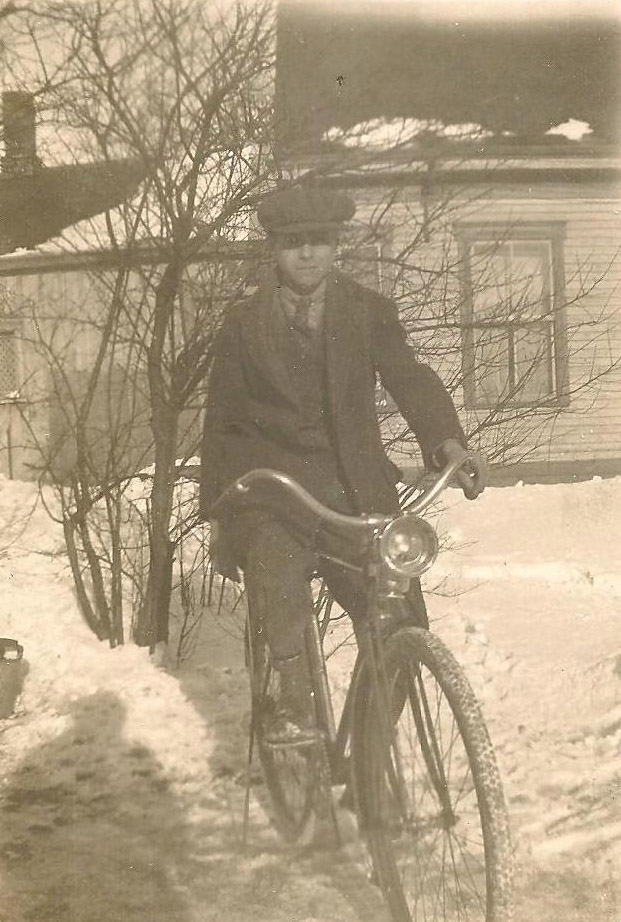
Chapter 15 - Ernie in Canada, early 1920s Despite the dubious link, Ernie would have enjoyed the Dunlop tyre claim, and in Laindon he probably took every chance to follow the company’s advice to ride. Ernie had been an avid roller-skater back in his old Marshalsea Road neighbourhood, so the move to a bicycle was a natural progression, and all his life he would love to cycle. A photo taken several years later attests to his comfort on two wheels. He slumps casually on the seat of a sturdy bicycle, one hand dangling at his side, the other resting on the handlebar. His right foot sits on the raised pedal, his pant leg is tucked into a sock so as not to get caught in the chain; the other foot is planted on the ground, holding his balance. Dressed in a wool jacket, vest and tie and with a flat cap shading his eyes from the slanting sun, he gazes steadily at the camera. In most other early photos of Ernie, there is a Chaplin-esque look about him – a thin-shouldered vulnerability that lifts off the paper – but in this single shot, that quality is absent, replaced by a confident, relaxed demeanor.